

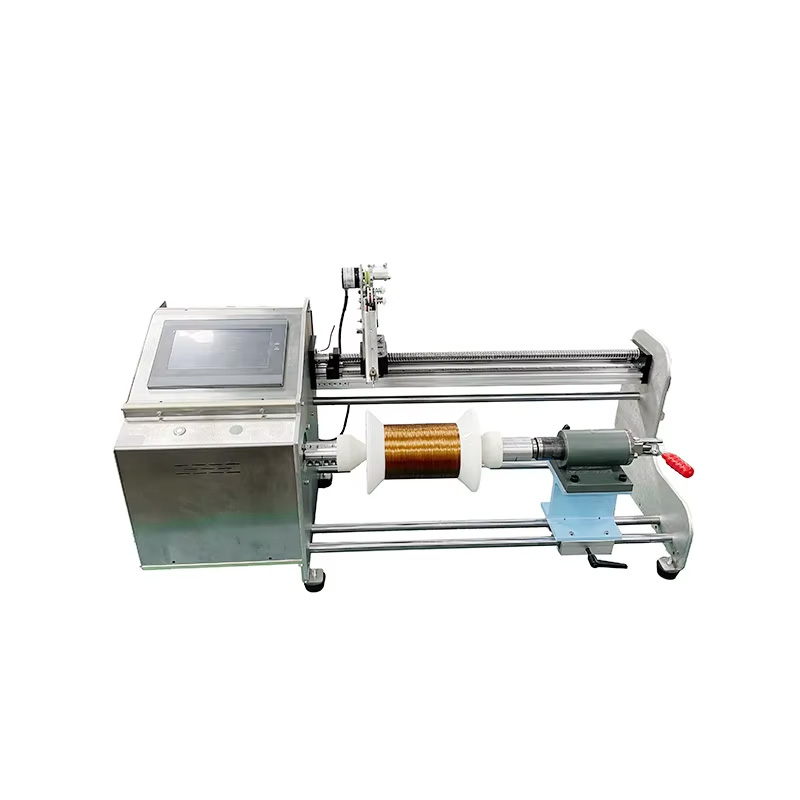
A large coil winding machine should be specified from the wire, fixed shaft or mandrel, finished coil geometry and loaded inertia. The mapped ITC-PLC-70 reference lists a 40 kg machine with PLC, bearings and motor as core components. The source title describes winding different wire materials onto a fixed shaft with a high-torque motor tailstock.
The source also identifies touchscreen operation, honeycomb, increasing-layer, decreasing-layer, parallel and multi-section winding modes, customizable programs and mechanical or magnetic tensioner options. It does not establish a servo drive, motor power, numeric speed range, maximum shaft load, coil-size limit or universal forming accuracy. BOYAN confirms those values through engineering review.
Email yangle990706@gmail.com with wire data, shaft or mandrel drawing, finished coil dimensions, target speed, tension requirement and sample availability. BOYAN will prepare a scoped technical quotation after reviewing the application.
Large Coil Winding Machine Overview
The large coil winding machine is a 40 kg reference platform for winding approved material onto a customer-defined fixed shaft, mandrel or coil fixture. Its distinguishing search intent is the mechanical interface and loaded coil geometry, not a generic promise to manufacture every motor or electrical component.
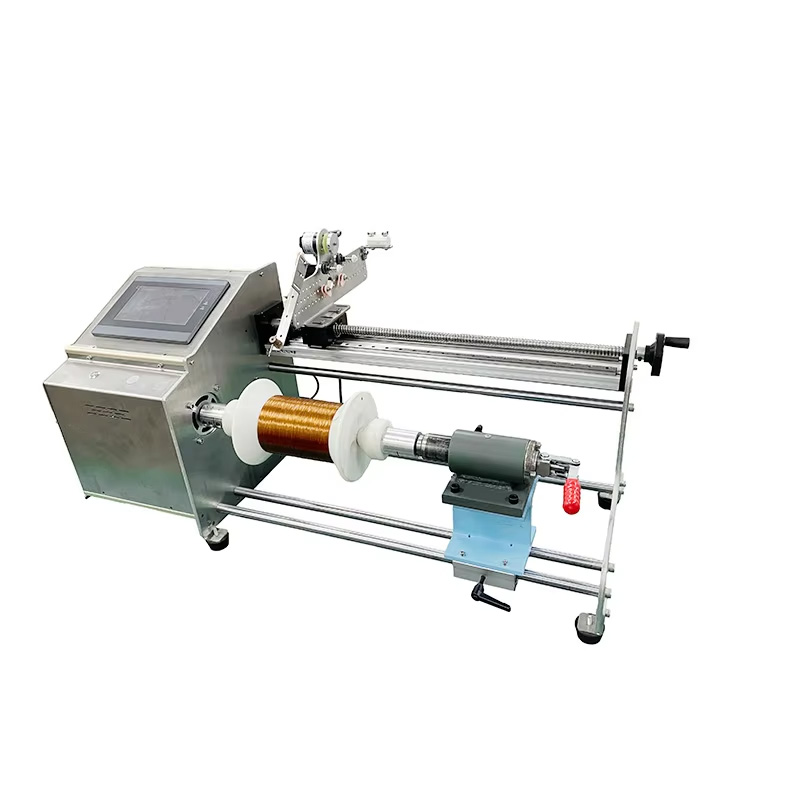
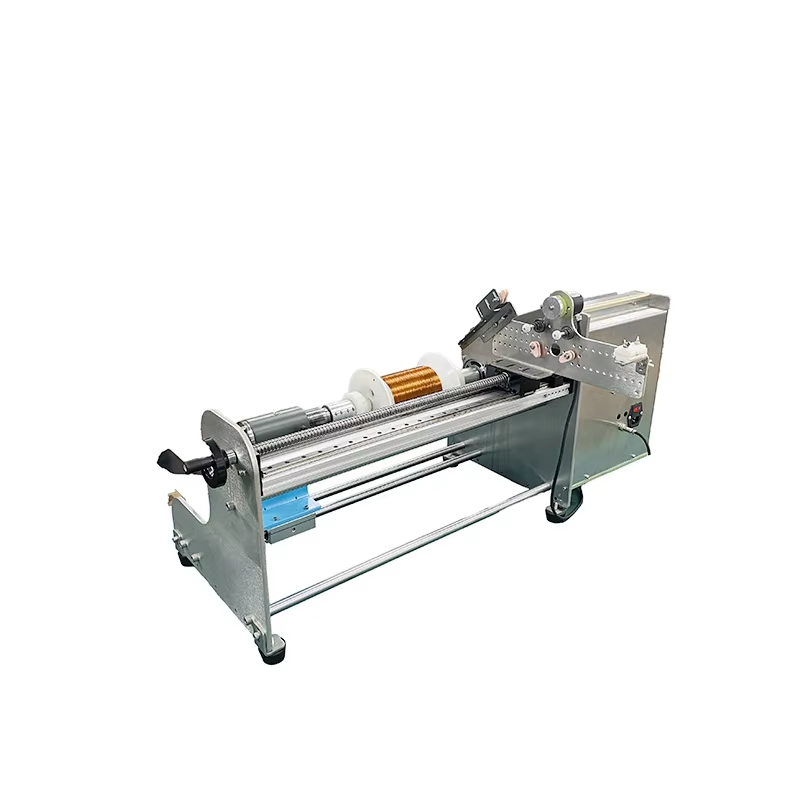
The motor tailstock description indicates a driven or supported winding arrangement, but the exact headstock, tailstock, shaft, chuck and support relationship must be shown on the final drawing. The quotation should identify each included fixture, bearing support, drive component and operator step.
5 Best Uses for a Tailstock Winding Platform
- Large custom coils: wind approved wire onto a defined shaft or mandrel with measurable dimensions.
- Honeycomb packages: evaluate the source-listed winding mode against the actual material and fixture.
- Layered coil structures: program increasing-layer or decreasing-layer sequences where the geometry is approved.
- Parallel or multi-section winding: create separately defined sections, widths and transitions.
- Repeat heavy-fixture products: control tooling, recipes, sample approval and changeover records.
These uses are application categories for a large coil winding machine. Suitability, speed, tension and finished accuracy depend on the buyer’s wire and tooling.
Verified Reference Specifications
| Item | Source-backed reference | Quotation note |
|---|---|---|
| Model | ITC-PLC-70 | Confirm final configuration and nameplate |
| Machine mass | 40 kg | Does not define allowable coil load |
| Overall-size field | 980 × 330 × 400 | Unit must be confirmed by drawing |
| Core components | PLC, bearings and motor | Final component details belong in the quotation |
| Mechanical concept | Fixed shaft with motor tailstock described | Confirm shaft, support and drive interfaces |
| Winding modes | Honeycomb, increasing layer, decreasing layer, parallel, multi-section | Validate required mode with sample |
| Operator interface | Intelligent touchscreen described | Confirm recipe fields and languages |
| Tension options | Mechanical or magnetic tensioner described | Confirm range and selected device |
| Reference packing | 104 × 44 × 49 cm; 58.8 kg gross | Confirm after fixtures and options |
| Conformity | CE indicated for source configuration | Confirm documents for quoted machine |
The source does not publish motor power, voltage, speed, shaft diameter, allowable coil mass, coil diameter, winding width, tension range or placement tolerance. These are engineering inputs, not values to infer from photos or product names.
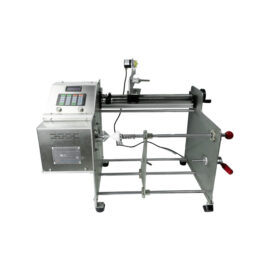
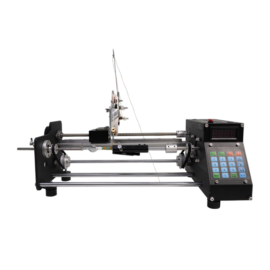
Machine Views for Engineering Review

Wire and Material Data
Before configuring a large coil winding machine, provide conductor or line material, construction, nominal diameter, tolerance, coating, stiffness, minimum bend and surface requirements. Identify sensitivity to scratching, flattening, twist, work hardening or heat.
The source says the machine can wind different wire materials but does not publish a diameter range. Send datasheets and representative samples. Guide material, path radius, tension method, speed and shaft interface must suit the actual wire.
Fixed Shaft and Tailstock Interface
The shaft or mandrel is the primary mechanical input for a large coil winding machine. Provide length, diameter, ends, keyway, thread, flange, support locations, runout requirement and allowable deflection. State whether the shaft remains in the finished product or is removed after winding.
Define headstock and tailstock connection, clamping method, axial retention and installation sequence. If the customer supplies the shaft, include material and tolerance drawings. If BOYAN supplies it, list the exact shaft and adapters in the quotation.
Coil Geometry and Loaded Inertia
Provide empty fixture mass, finished coil mass, starting diameter, maximum outside diameter, winding width and centre of gravity. A large coil winding machine operating limit depends on loaded inertia and balance, not only the 40 kg machine mass.
Define whether the coil is cylindrical, stepped, multi-section, honeycomb or another shape. Include edge limits, section gaps, crossover locations and finished-dimension tolerances. BOYAN should review bearing support, shaft retention, motor torque and stopping requirements together.
Honeycomb Winding Mode
Honeycomb winding is listed as a supported mode, but the source does not define cross angle, pitch or package limits. For a large coil winding machine, provide the target pattern, material, shaft diameter, width and approved sample. State how the pattern is inspected.
The relationship between rotation and guide motion determines the cross pattern. A sample trial should examine wire crossings, edge behaviour, surface contact and unwind performance where relevant. The quotation should identify any traverse or guide components required.
Increasing-Layer and Decreasing-Layer Modes
Increasing-layer and decreasing-layer winding are described in the source. Define how layer count, width, diameter or section changes through the product. The large coil winding machine recipe should translate the drawing into clear segment and transition rules.
Provide the start layer, final layer, direction, pitch and any dwell or crossover. Acceptance should measure the finished shape and compare it with an approved drawing or sample. The source does not establish automatic geometry correction.
Parallel and Multi-Section Winding
Parallel winding can mean side-by-side turns or several approved lines, while multi-section winding divides the shaft into separate regions. For the large coil winding machine, define line count, pitch, section width, gap, direction, layer rule and transition between sections.
If different materials or wire sizes are used in separate sections, list them individually. Define start and end attachment for every section. A visual description should be supported by measurable dimensions.
Touchscreen and Recipe Definition
The source describes intelligent touchscreen control and customizable programs. The final large coil winding machine quotation should list recipe fields, display language, user permissions, storage capacity and how approved programs are protected from accidental changes.
Typical required fields may include mode, direction, target turns or length, speed, guide relationship, section data and ramp settings, but only the final quoted interface is included. Data export, networking and remote control are not established by the source.
Speed Requirement Without an Unsupported Number
No numeric speed range is published for the reference large coil winding machine. Provide required rotation speed, line speed, acceleration, deceleration, stopping time and cycle target. High torque in the source title does not define motor torque or safe maximum speed.
The operating window depends on shaft balance, loaded inertia, coil diameter, wire, tension, guide path, motor, bearings and guarding. Sample testing should start at a controlled value and approve a recipe only after stable results.
Mechanical or Magnetic Tensioner Selection
The source describes mechanical or magnetic tensioner options. For a large coil winding machine, provide target tension, allowable variation, wire speed and package-diameter change. BOYAN can then select and quote one device or another appropriate system.
The source does not publish a range or closed-loop architecture. The quotation must state the selected tensioner, adjustment method, measuring point and whether tension is an acceptance item. Do not assume both devices are included.
Guide and Traverse Requirements
Provide guide material, groove size, contact radius, working width, pitch and edge limits. If the large coil winding machine uses a traverse, define its relationship to shaft rotation for every winding mode. Specify reversal position and section boundaries.
Sample trials should inspect wire surface, crossings, gaps, edge fall-off and transition points. If automatic correction or line sensing is required, identify the sensor and measurable response in the quotation.
Control Sequence
Write the full large coil winding machine sequence: inspect wire, install shaft, engage tailstock, verify support, load supply, thread guides, attach start, select recipe, close guards, start, wind, decelerate, stop, secure end, release tailstock and remove the coil. Identify automatic and manual steps.
Define the response to emergency stop, wire break, excess resistance, open guard, power loss and restart where supported. A clear sequence prevents a broad “automatic” label from hiding required operator work.
Application Data Checklist
- Wire material, construction, diameter and coating
- Minimum bend, abrasion and surface limits
- Shaft or mandrel drawing, ends, supports and runout
- Empty and finished mass, inertia and balance data
- Starting diameter, final diameter and winding width
- Required winding mode, pitch, layers and sections
- Target rotation speed, line speed and cycle time
- Tension range and selected control method
- Supply-package drawing and payout direction
- Start attachment, end handling and coil removal
- Required alarms, records and quality checks
- Electrical supply, samples and FAT material
Email the checklist to yangle990706@gmail.com. Complete data lets BOYAN review the large coil winding machine around the shaft, coil and measurable process.
Supply Package and Pay-Off
Provide supply-spool flange diameter, barrel, width, bore, loaded mass and payout direction. The large coil winding machine source does not establish a supplied pay-off, brake or dancer. Any external frame, tension device, sensor or accumulator must be listed in the quoted scope.
Define how wire is loaded and how the free end is controlled. The supply path must accommodate the full coil build without rubbing, excessive bend or uncontrolled payout.
Installation and Access Planning
The reference machine is 40 kg and the size field displays 980 × 330 × 400, with unit confirmation required. Plan a stable foundation or bench, safe working height, lighting and clearance around the large coil winding machine. Include shaft insertion, tailstock travel, supply package, guard and coil removal.
Reference packing is 104 × 44 × 49 cm and 58.8 kg gross. Final packing follows approved tooling. Check doorway, elevator, unloading and handling method before delivery.
Electrical Preparation
The source does not publish voltage, power, frequency or phase. Provide destination supply and plant electrical standard for the large coil winding machine. The final nameplate, circuit protection, grounding, connection and diagram must govern installation.
Do not infer motor power from “high torque.” Any external emergency-stop, line signal or data interface should be defined during engineering review. Route cables away from rotating shafts and operator loading areas.
Sample Trial Plan
- Record wire specification, lot and condition.
- Inspect shaft, supports, supply package and guides.
- Install the shaft and verify retention and runout.
- Thread the documented path and attach the start.
- Load the preliminary winding-mode recipe.
- Start at a controlled low setting.
- Increase within the planned process window.
- Measure speed, tension and in-process geometry.
- Inspect finished dimensions and wire surface.
- Repeat after a representative changeover.
The large coil winding machine trial should reproduce representative coil mass and diameter. Change one important variable at a time and retain the approved sample and recipe.
Factory Acceptance Test
FAT should confirm ITC-PLC-70, 40 kg reference machine, PLC, bearings, motor, tailstock, shaft fixtures, guides, touchscreen, selected tensioner and safety functions. Run the buyer’s wire and tooling when possible. For the large coil winding machine, measure dimensions, mode result, speed, tension and repeatability according to the quotation.
Define instruments, sample size and limits before testing. Record deviations and corrective actions. Signed results and approved samples should control acceptance.
Safety Review for Large Rotating Coils
A large shaft and coil can create stored energy, pinch points and ejection hazards. The final large coil winding machine should be reviewed for shaft retention, tailstock locking, guarding, emergency stopping, safe restart, electrical protection and controlled loading.
The buyer must integrate the equipment into the actual workplace and applicable regulations. Official OSHA machine-guarding guidance is a useful reference for common hazards; destination-specific requirements and the final risk assessment still govern the project.
Commissioning Checklist
- Verify model, PLC, motor, bearings, tooling and documents.
- Inspect foundation, guarding, cables and operating clearance.
- Confirm shaft retention, tailstock, guides and supply path.
- Load the approved recipe and restrict edits.
- Test start, stop and agreed fault responses.
- Run the accepted wire, shaft and coil geometry.
- Measure dimensions, speed, tension and mode result.
- Release production only after results are recorded.
Commissioning should reproduce the accepted large coil winding machine trial. A change to wire, shaft, fixture, coil mass or mode may require a new recipe and verification.
Operator Training and Changeover
Training should cover shaft inspection, lifting or loading, tailstock locking, wire threading, recipe selection, normal stopping, abnormal response, end handling and coil removal. For the large coil winding machine, use a first-piece check after each changeover.
Document adapters, guides, tensioner settings, recipe number and approved sample for each product family. Clear changeover control reduces wrong tooling, wrong mode and unsafe shaft retention.
Quality Control and Traceability
Connect each coil to wire lot, shaft or fixture, recipe, operator and inspection result. A large coil winding machine supports repeatability only when material, tooling and settings are controlled together.
Record finished diameter, width, section geometry, surface condition and any downstream test at the agreed frequency. Define nonconforming-coil handling and retain approved samples or images where visual criteria matter.
Documentation and CE Confirmation
CE is indicated for the source configuration. Final large coil winding machine documentation may change with shaft, tailstock, tensioner, guard, electrical supply and destination. Ask BOYAN to list the declaration, manuals, labels, drawings, parts list and FAT report for the exact quoted configuration.
Final documents should confirm ITC-PLC-70, dimension unit, mass, electrical data, selected winding modes, packing and included accessories. Commercial warranty or service terms belong in the BOYAN offer.
Maintenance Planning
Inspect the large coil winding machine bearings, shaft retention, tailstock, motor, guides, tensioner, guards, fasteners and cables before production. Keep wire-contact surfaces clean. Investigate vibration, noise, heat, runout or geometry drift before continuing.
Set intervals from actual mass, speed, duty cycle and environment. After bearing, shaft, motor, guide or tensioner service, repeat the checks that could affect safety, dimensions or wire condition.
Compare Related BOYAN Winding Equipment
Browse the BOYAN Winding Machines category for the full equipment group. For parallel winding focused on line count, pitch and guide layout rather than a large fixed shaft and tailstock, compare the CNC Parallel Winding Machine.
Use our winding machine selection guide to compare control, material, package, speed, tension and application data before requesting a configuration.
This page owns the distinct intent for a large coil winding machine where shaft interface, tailstock support, coil mass, winding mode and finished geometry are the primary selection questions.
Quotation Workflow
- Define wire: material, diameter, coating and handling limits.
- Define tooling: shaft, tailstock, supports and retention.
- Define the coil: mass, diameter, width, layers and sections.
- Set controls: mode, speed, tension, guides and alarms.
- Approve validation: samples, FAT method and documents.
Email yangle990706@gmail.com with “Large Coil Winding Machine Enquiry” in the subject. BOYAN will prepare a scoped technical quotation after application review.
Frequently Asked Questions
What is the reference model?
The mapped source lists ITC-PLC-70 with PLC, bearings and motor as core components.
What winding modes are described?
Honeycomb, increasing-layer, decreasing-layer, parallel and multi-section winding are listed.
What is the maximum coil size or weight?
The source does not publish limits. Send shaft, empty fixture and finished coil data for large coil winding machine review.
Does it use servo control?
No servo architecture is established. The final motor, controller and feedback type will be stated in the quotation.
What tensioner is available?
Mechanical or magnetic tensioner options are described. The selected device and range depend on the wire and required tension.
What is the maximum speed?
No numeric speed is published. Provide the required rotation or line speed for sample validation.
What are the reference mass and size?
The source lists 40 kg and a size field of 980 × 330 × 400. Confirm the unit on the final drawing.
What is the reference packing?
The source lists 104 × 44 × 49 cm and 58.8 kg gross. Final packing follows approved tooling.
How do I request a quote?
Send wire data, shaft and coil drawings, mass, winding mode, speed, tension, electrical data, acceptance criteria and sample availability to the enquiry email on this page.
Request a Large Coil Winding Machine Review
The right large coil winding machine is the configuration that safely supports the buyer’s shaft and produces the defined coil geometry from actual wire. BOYAN uses the verified ITC-PLC-70, 40 kg, PLC, bearing, motor, five-mode and tensioner reference facts without turning unsupported servo, speed or accuracy claims into promises.
Send your application package for review. BOYAN will define tooling, controls, safety, test plan, documentation and commercial offer around the approved large-coil process.
Reviews
There are no reviews yet.