
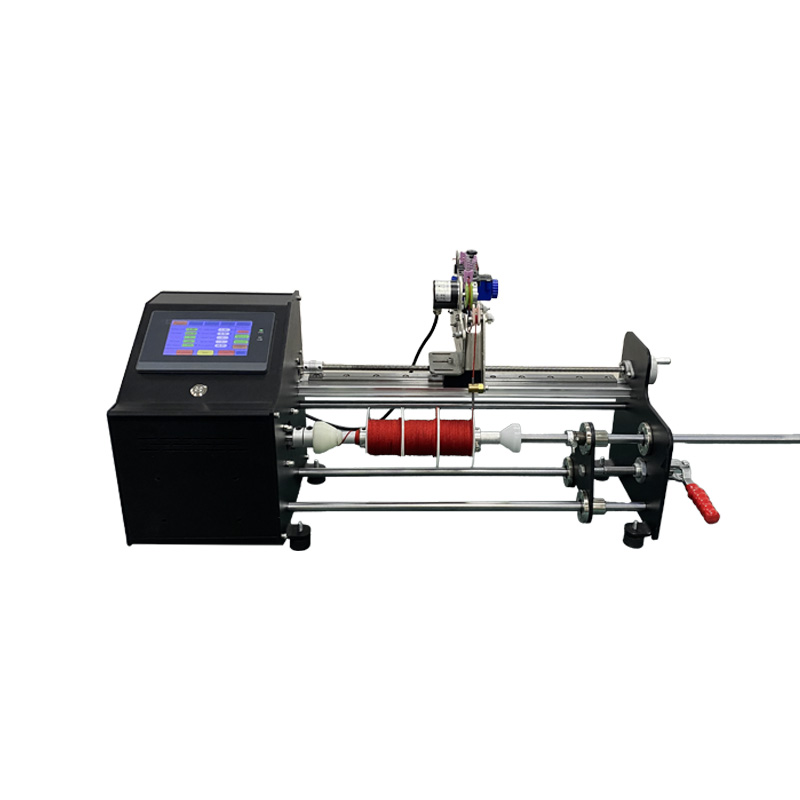
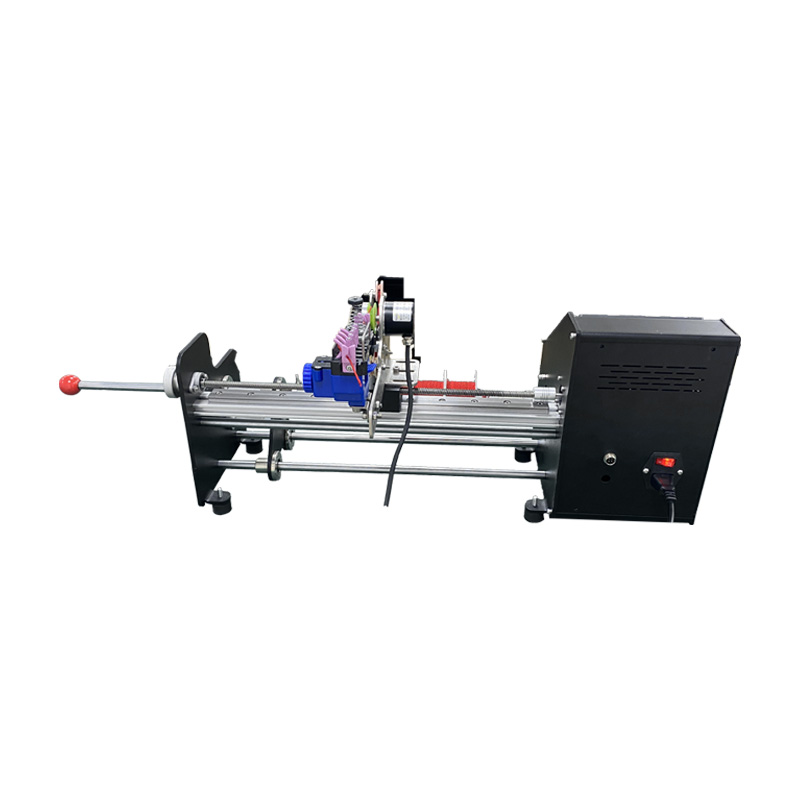
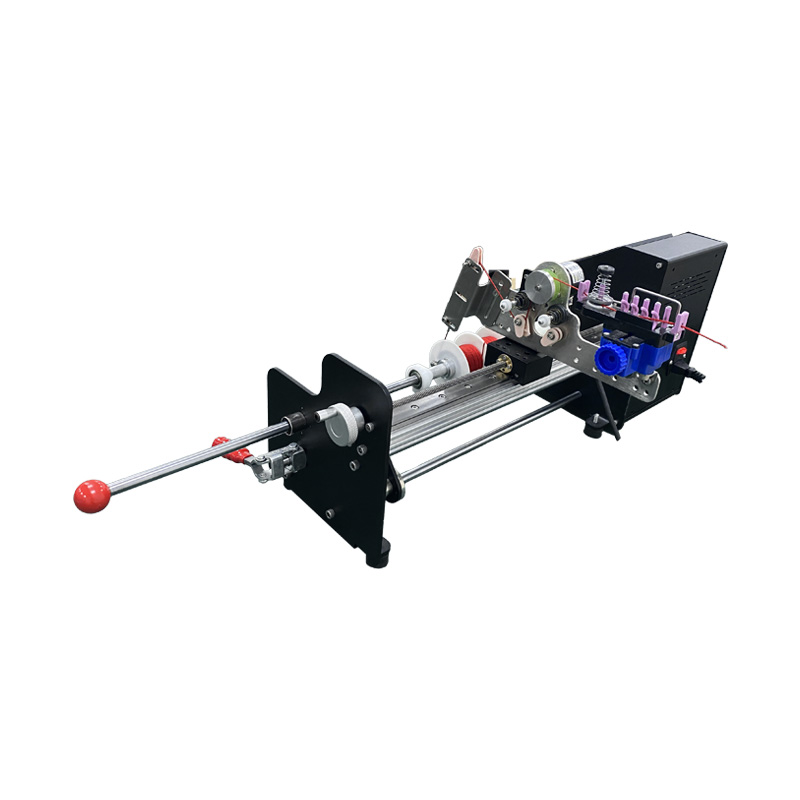
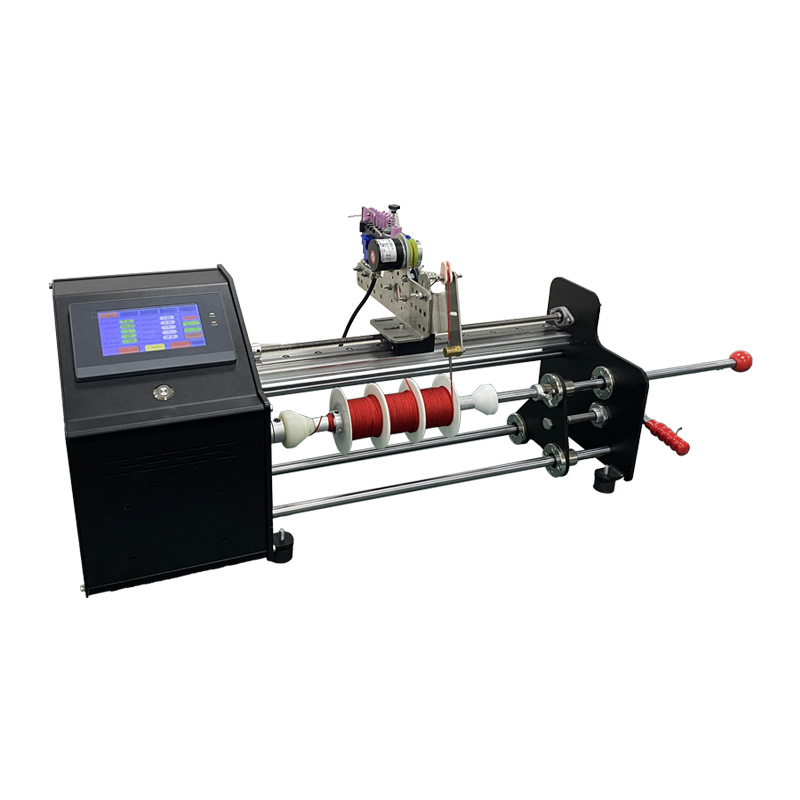
Intelligent Touch Screen Winding Machine Overview
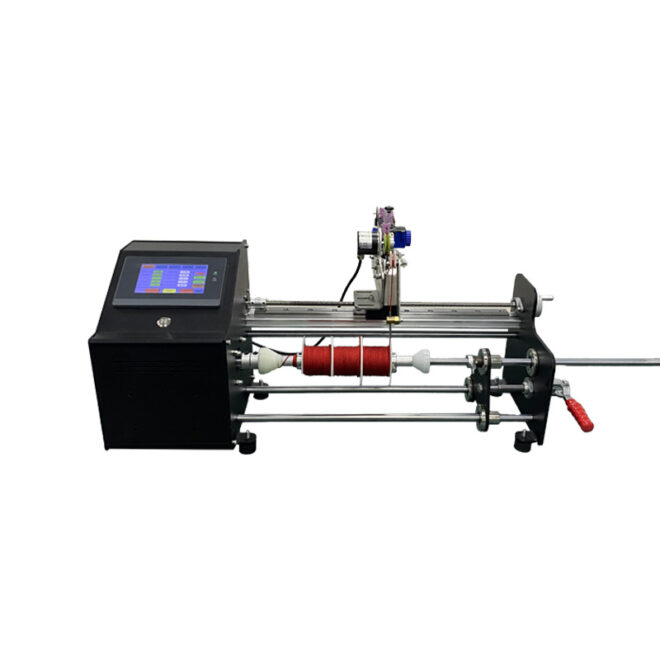
The intelligent touch screen winding machine is a programmable winding platform for buyers who need a clear visual interface, multiple winding patterns and repeatable stored settings. The verified reference configuration is model PWD-M-30. It combines a PLC, motor, touchscreen, data storage and one-key start. Its listed winding modes include honeycomb, increasing-layer, decreasing-layer and parallel winding, allowing the process to be reviewed around different package shapes and material behavior.
The intelligent touch screen winding machine is especially relevant when an operator must choose among validated winding patterns without rebuilding every program. This page focuses on operator control and winding-mode selection. It does not assume that every wire can use the same setting. Material construction, package geometry, winding length, spacing, payout behavior and acceptance criteria must be reviewed before a configuration is quoted. Send BOYAN your drawing and sample so the winding path, fixture and program can be evaluated as one system.
For a technical review, email yangle990706@gmail.com. Include the material, supply package, finished package, required pattern, length, spacing, target output and destination electrical standard.
5 Best Control Features for Production Setup
1. Visual Touchscreen Interface
The touchscreen provides a visual place to set and review the approved winding program. A well-defined screen workflow helps operators identify the selected recipe, winding mode and permitted values before starting. The exact screen fields, units, user levels and language should be listed in the quotation. The interface is useful because it makes the setup visible; it does not replace operator training or material approval.
2. Four Winding Modes
The source configuration identifies honeycomb, increasing-layer, decreasing-layer and parallel winding modes. Each mode describes a different relationship between the traverse and the rotating package. The correct choice depends on how the material builds, how the package will be handled and how it must unwind later. BOYAN reviews the requested pattern against the actual spool or workpiece rather than selecting a mode from the name alone.
3. PLC Program Control
A PLC and motor are listed as core components. The PLC coordinates the approved sequence, parameter logic and start or stop conditions. For an intelligent touch screen winding machine, this provides a controlled connection between what the operator selects and how the winding cycle is executed. Any external signal, alarm, counter or upstream/downstream interface must be specified before the program scope is fixed.
4. Data Storage and Recipe Recall
Stored winding data can reduce repeated entry when a validated product returns to production. The source states that winding parameters can be saved and recalled. Each recipe should be linked to the correct material, fixture, package and revision. A stored value is only reliable when the production team controls who may change it and confirms that the physical setup matches the approved record.
5. One-Key Start with Defined Checks
One-key start is a listed feature intended to simplify the production sequence after setup. Before it is used, the operator should confirm material loading, fixture security, selected recipe, winding direction and safe clearance. The start control should therefore be part of a documented checklist, not treated as permission to skip setup verification.
Verified Reference Data
| Item | Reference value | Quotation check |
|---|---|---|
| Model | PWD-M-30 | Final option and tooling revision |
| Machine weight | 14 kg | Installed configuration |
| Source dimension field | 700 × 220 × 250 | Unit and final outline drawing must be confirmed |
| Core components | PLC and motor | Electrical supply and drive configuration |
| Operator interface | Intelligent touchscreen | Language, fields, units and access levels |
| Winding modes | Honeycomb, increasing-layer, decreasing-layer and parallel | Approved pattern and parameter window |
| Motion profile | S-shaped acceleration and deceleration | Speed and ramp for the actual material |
| Process functions | Data storage, parameter recall and one-key start | Recipe capacity, naming and sequence |
| Reference packing | 75 × 30 × 34 cm; 15.4 kg gross | Final packing after options are fixed |
| Adaptation scope | Length, spacing and special-shaped fiber may be reviewed | Drawing, sample and acceptance criteria |
The dimension field on the source page displays 700 × 220 × 250 but does not present a reliable translated unit. BOYAN will confirm the unit on the final drawing instead of publishing an assumption. Packing data is a reference and may change with tooling, accessories and export protection.
How the Four Winding Modes Are Evaluated
Parallel Winding
Parallel winding aims to place turns in an organized adjacent arrangement. The traverse distance per revolution, material width and package geometry need to work together. An operator should not compensate for an unsuitable guide or spool by making uncontrolled program changes. A trial should verify the package edges, spacing, surface condition and unwind behavior.
Honeycomb Winding
Honeycomb winding creates a deliberate crossing pattern. It may suit a package that needs a crossed build, but the crossing relationship must be established for the real material. Diameter, stiffness, coating, supply tension and package width affect the result. The intelligent touch screen winding machine provides this mode as a programmable capability; the final angle and spacing still require process confirmation.
Increasing-Layer Winding
An increasing-layer program changes the package build according to the approved geometry as the winding progresses. The required movement depends on the starting diameter, material thickness and target package. The buyer should explain how each layer is expected to grow and what visual or dimensional result defines acceptance.
Decreasing-Layer Winding
A decreasing-layer program manages a package whose required traverse or build changes in the opposite direction. This mode should be confirmed with a drawing or accepted sample because the product name alone does not define the motion. BOYAN will review how the material transitions between layers and where the cycle should end.
S-Shaped Acceleration and Deceleration
The verified feature list includes S-shaped acceleration and deceleration. Instead of applying an abrupt speed step, the program uses a progressive ramp. For a suitable material, this can make starting and stopping more controlled. The useful ramp depends on package inertia, material stiffness, guide path and required cycle time.
This function should not be described as automatic tension control. The source does not establish a closed-loop, real-time tension system for this model. If the application needs a defined tension range or a feedback device, the buyer must provide the requirement so the final configuration can state the actual method and measurable performance.
Emergency Stop and Abnormal Conditions
An emergency stop function is listed in the source highlights and is intended to provide a rapid stop response when an abnormal condition occurs. The source associates it with reducing the risk of material pulling or breaking during winding. Actual stopping behavior depends on speed, inertia, load and final control design, so it must be tested on the quoted machine.
The site using an intelligent touch screen winding machine should perform a risk assessment for the complete installed process. Define guards, access, emergency response, material loading and restart rules. An emergency stop is not a routine cycle control and does not replace correct fixtures, guides or operating procedures.
Materials Identified for Application Review
The source lists enameled wire and fishing line as example materials and states that special-shaped optical fiber can be considered through parameter adaptation. These examples do not prove universal compatibility. Surface sensitivity, cross-section, bend limit, allowable contact and downstream use must be checked for every project.
For enameled wire, provide conductor diameter, insulation type, acceptable surface condition, supply package and final coil geometry. For fishing line, provide line construction, nominal diameter, memory, target package and the intended downstream unwind. For special-shaped fiber, include a cross-section drawing, orientation requirement, minimum bend rule and surface-contact restriction.
Each intelligent touch screen winding machine application is reviewed against its real contact path and package geometry. BOYAN can use this information to determine whether guide materials, contact geometry, fixtures or program limits must change. Where the data is incomplete, the recommendation will remain conditional until a sample trial is completed.
Application Data Checklist
- Material name, construction and nominal diameter or width
- Minimum and maximum dimensional tolerance
- Surface, coating and allowable contact requirements
- Supply spool drawing, size, weight and payout direction
- Finished spool, core or workpiece drawing
- Required winding mode and a photograph of an accepted package
- Winding length, spacing, pitch or layer rule
- Target speed, cycle time and production quantity
- Inspection method and measurable acceptance limits
- Voltage, frequency, language and factory environment
- Required external signals, counters or data records
- Available trial material and shipping quantity
Email the checklist to yangle990706@gmail.com. A complete enquiry lets BOYAN review the whole process and helps prevent a quotation based on an unsupported generic description.
Touchscreen Recipe Design
A useful recipe should show only the parameters the operator needs for the approved process. Typical fields may include a job name, pattern, length, spacing, speed profile and fixture reference, but the actual field list belongs in the quoted software scope. Units and permissible ranges should be unambiguous.
Recipe naming matters. Use a code that links the program to the product drawing and tooling revision. Record who approved the setting and when it was tested. If a parameter is changed, create a controlled revision rather than silently overwriting a proven program. This makes data storage more valuable for repeated orders.
For an intelligent touch screen winding machine, user access can also be discussed. Operators may need selection and start rights, while engineering personnel may need controlled edit rights. Confirm whether user levels or change records are required before quotation.
Sample Trial Plan
The trial should use representative material, not only an empty dry run. Load the intended supply package, route the material through the approved guide path and mount the actual or representative receiving fixture. Record the recipe, winding mode, speed ramp and observed behavior.
Check the start, steady winding, layer transition and stop. Inspect package edges, crossing pattern, spacing, surface condition and any twist or deformation. Unwind a sample using the downstream method when that behavior is important. Repeat enough cycles to determine whether the result can be reproduced.
If the result is not accepted, document the defect before changing settings. Adjust one controlled factor at a time where practical. Save a new recipe revision only after the change is understood and accepted. The approved sample, drawing and settings should then form the basis for the factory acceptance test.
Factory Acceptance Test
The factory acceptance test should reflect the written quotation. It can include touchscreen operation, recipe storage and recall, one-key start, the agreed winding modes, S-shaped speed changes, emergency response and the approved sample result. The number of cycles, inspection method and pass criteria should be defined in advance.
For the intelligent touch screen winding machine, acceptance should not rely on phrases such as “high precision” or “high efficiency” without a measurement. Name the variable, tolerance, method and test material. If length, spacing or package width is important, document how it will be measured.
Photographs, video, parameter records and the accepted package can support remote review, but the final method should be agreed by both parties. Any option outside the quotation should be treated as a change in scope.
Installation and Electrical Preparation
Use the reference size only for preliminary planning. Wait for the final outline drawing before drilling, building a bench or setting permanent cable routes. Allow access for material loading, package removal, inspection, cleaning and maintenance. Check the final center of gravity and support requirement after tooling is included.
Provide the destination voltage, frequency, phase and connection preference. Describe any required signal exchange with payout equipment, counters, alarms or a production line. If the machine must report status or receive a start permission, define each signal and safe response. Do not assume that a generic PLC automatically includes every interface.
Commissioning Checklist
- Confirm the delivered model, tooling, electrical data and documentation against the quotation.
- Inspect guards, fixtures, guides, fasteners and cable connections.
- Verify touchscreen fields, units, user permissions and language.
- Test normal start, stop and the agreed emergency response.
- Load the approved material and select the correct controlled recipe.
- Run the required winding modes and confirm direction and transitions.
- Verify data storage and recall without altering the approved values.
- Inspect the finished package using the agreed acceptance method.
- Record the released recipe, tooling revision and reference sample.
Operator training should cover loading, recipe selection, permitted parameter changes, abnormal response, cleaning and escalation. Maintenance training should cover the final mechanical and electrical documentation supplied with the machine.
Quality Control for Repeat Orders
For each repeat job, verify the material lot, supply package, receiving fixture and recipe before start. A correct program can still produce a different result if the material or mechanical setup changed. Record the recipe revision and inspection result with the finished package where traceability is required.
Visual inspection may identify uneven edges, incorrect crossing or surface damage. Some projects also need measured length, spacing, package width or unwind performance. Define the sampling frequency and the action taken when a result falls outside the limit.
The ISO overview of quality management principles provides general context for controlled processes and evidence-based improvement. Any required certification, standard or document for this project must be specified and verified for the exact quoted machine.
Documentation and CE Review
The source page identifies CE for its listed configuration. A customized machine may have a different electrical scope, tooling and documentation requirement. Ask BOYAN to list the declaration, manuals, labels, drawings and reports supplied with the exact quotation. Do not rely on a generic certificate statement.
The proposal should identify model, components, winding modes, tooling, software functions, electrical supply, accessories, spare parts, packing and acceptance test. If a particular document format or destination requirement is mandatory, raise it before order confirmation.
Maintenance and Change Control
Routine inspection should cover guides, fixtures, fasteners, cables and surfaces that contact the material. Clean using a method compatible with the wire or fiber. Look for wear or alignment changes that could affect the package. Follow the approved shutdown and safety procedure before maintenance.
When winding quality changes, compare the current material, fixture and recipe with the released reference. Check for a different supply package, coating, diameter or environmental condition before changing many parameters. Record maintenance and program revisions so their effect can be traced.
Spare parts depend on the final configuration. Request a machine-specific recommendation instead of assuming that parts from another intelligent touch screen winding machine are interchangeable.
Compare Related Winding Equipment
Browse BOYAN’s Winding Machines category for other winding architectures. For projects centered on CNC length measurement and parallel winding, review the CNC meter counting winding machine. The correct page should match the buyer’s primary requirement rather than repeat the same generic claim.
Use our winding machine selection guide to compare control, material, package, speed, tension and application data before requesting a configuration.
Quotation Process
- Send application data: drawings, photos, material specification and accepted package.
- Select the process: identify the required winding mode, length, spacing and ramp behavior.
- Review the hardware: confirm payout, guides, fixture, receiving package and electrical interfaces.
- Plan the trial: provide representative material and measurable acceptance criteria.
- Approve the scope: review the exact machine, tooling, software, documents, packing and exclusions.
Send the project file to yangle990706@gmail.com with “Intelligent Touch Screen Winding Machine Enquiry” in the subject. BOYAN will review whether PWD-M-30 is a suitable base and what needs to be customized.
Frequently Asked Questions
Which winding modes are listed?
The verified source lists honeycomb, increasing-layer, decreasing-layer and parallel winding. The program and parameter range must be approved for the actual material and package.
Can the machine save settings?
Yes. Data storage and parameter recall are listed functions. Recipe capacity, fields, access and backup requirements should be confirmed for the quoted configuration.
Does it include real-time tension control?
The verified source does not establish a closed-loop real-time tension system for this model. If tension feedback is required, provide the measurable range and control requirement for engineering review.
Is it a servo-driven machine?
The source lists a PLC and motor but does not verify a servo drive. The quotation will identify the actual motor and drive configuration.
Can it be used for enameled wire or fishing line?
Both are listed as compatible examples. Final suitability depends on diameter, coating, surface condition, spool geometry and trial results.
Can it handle special-shaped optical fiber?
The source states that this application can be adapted through custom winding parameters, length and spacing. Send the cross-section, bend rule, orientation and sample for review.
What is the machine size?
The source dimension field is 700 × 220 × 250, but its translated unit is not reliable. BOYAN will confirm the unit and outline on the final drawing.
How do I receive a technical quotation?
Email the material data, drawings, winding pattern, output target, electrical requirement and sample availability to the enquiry address on this page.
Request an Intelligent Touch Screen Winding Machine Review
The intelligent touch screen winding machine should be selected from measurable application data rather than from interface features alone. A successful selection starts with the material and finished package, then defines the winding mode, parameter window, tooling and acceptance method. BOYAN uses the verified PWD-M-30 reference as a starting platform and separates confirmed facts from options that still need engineering review. Send the complete application package to receive a scoped recommendation designed for email-based technical enquiry rather than a generic online purchase.

Reviews
There are no reviews yet.