
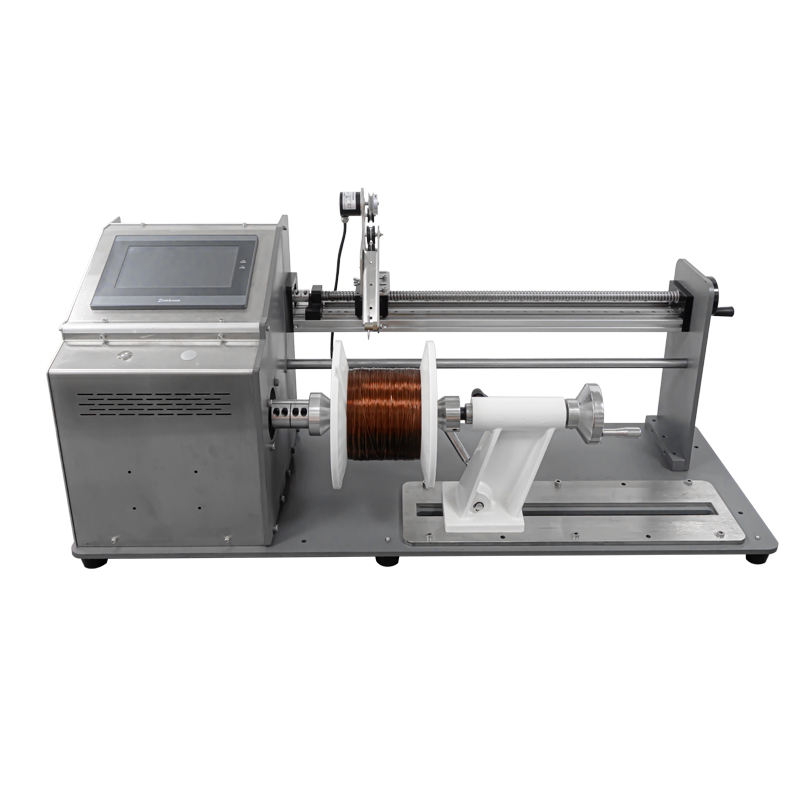
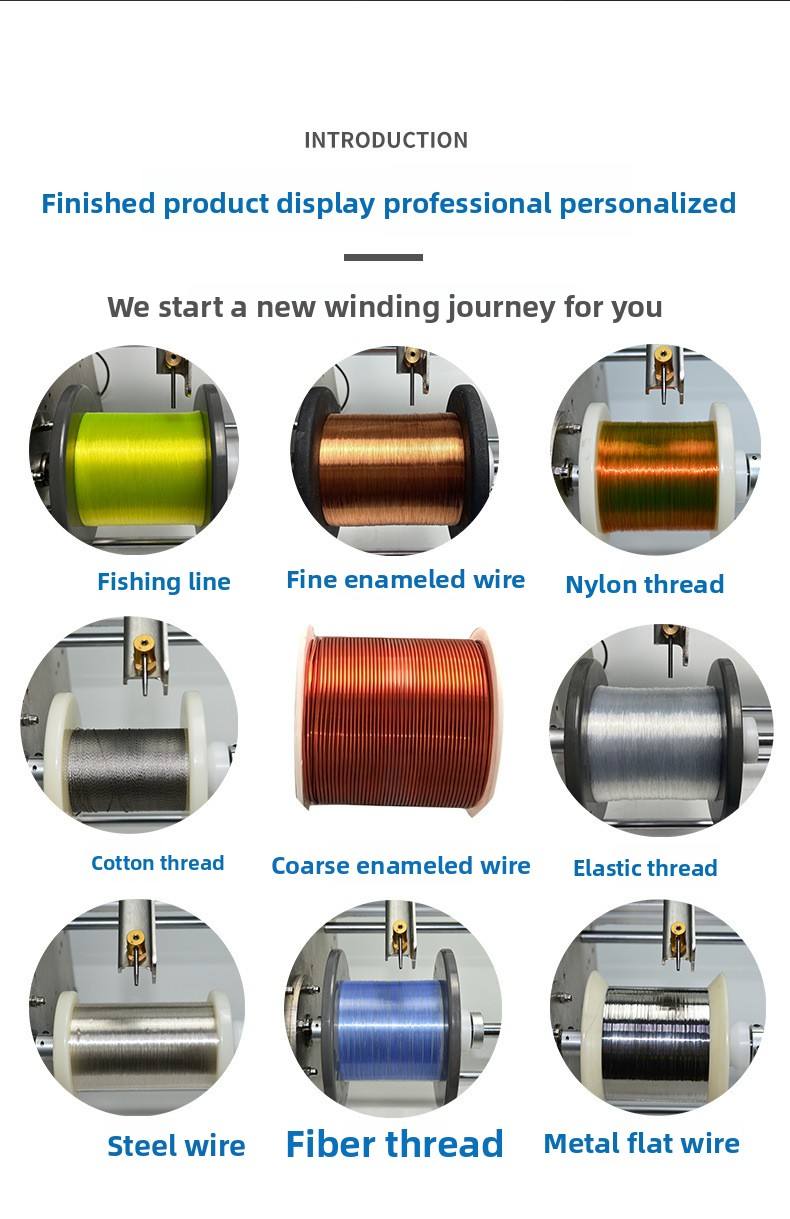
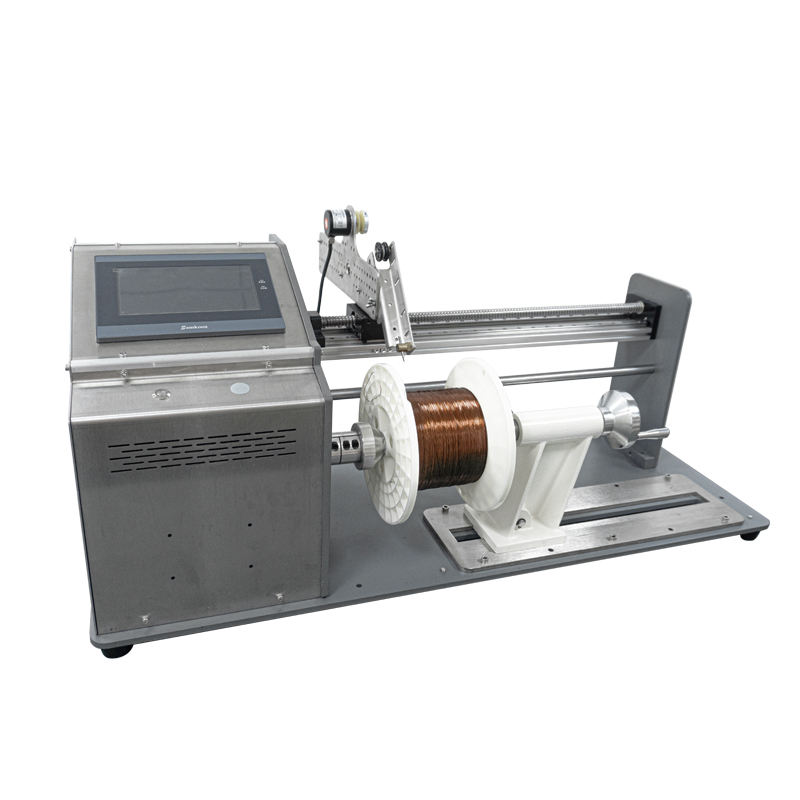
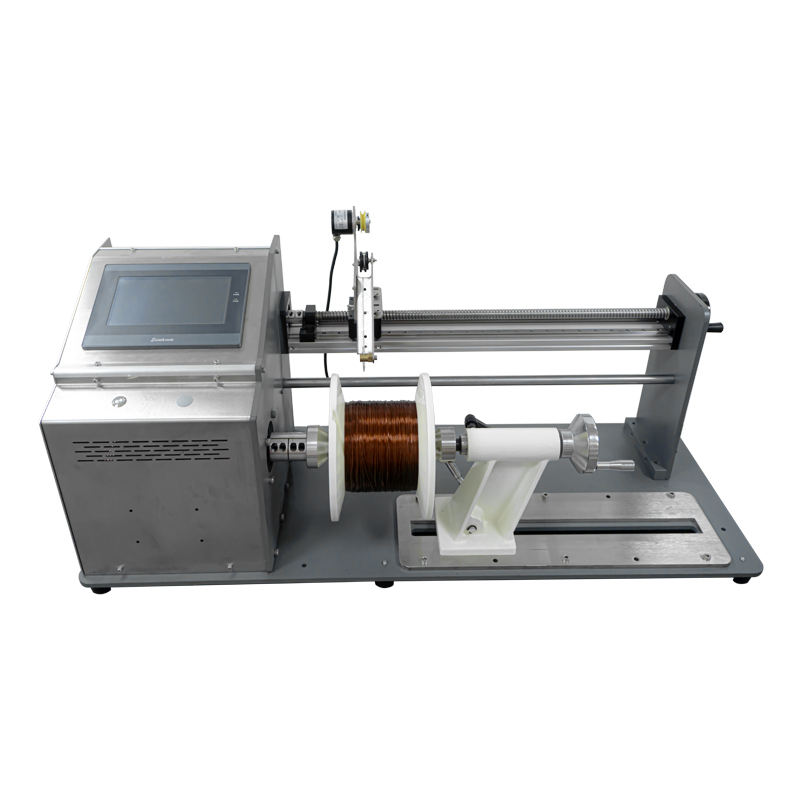
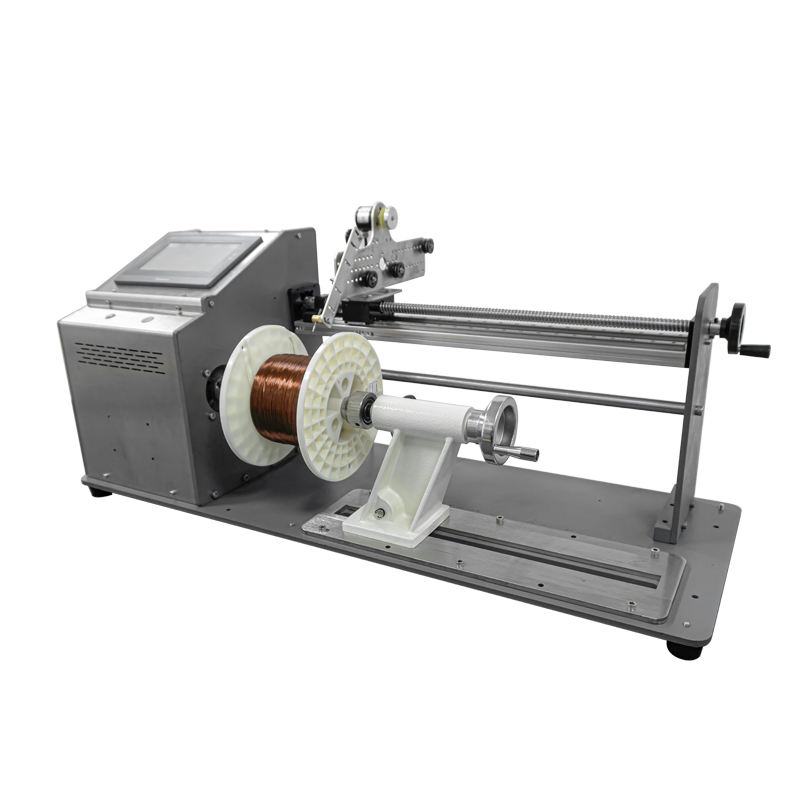
Touchscreen Wire Winding Machine Overview
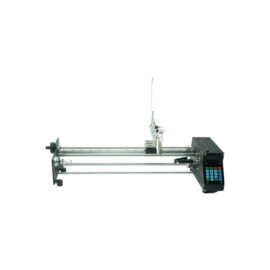
The touchscreen wire winding machine is a programmable metal-wire winding platform built around a PLC, motor and visual operator interface. The verified reference configuration is model ITC-PLC-70. It is listed with a high-power motor, automatic speed adjustment, a maximum reference rotation speed of up to 2400 r/min, and a stated metal-wire diameter range of 0.025 mm to 20 mm.
Those headline limits describe the source configuration, not one universal process window. A very fine wire and a 20 mm metal wire impose different requirements on guides, fixtures, package inertia, bending, surface protection and safe speed. BOYAN therefore reviews each material and receiving package before confirming the usable diameter and speed for a quotation.
Email yangle990706@gmail.com with the alloy or material, wire diameter, mechanical condition, surface requirement, supply spool, finished package and target speed. BOYAN will use the data to evaluate whether the reference machine, tooling and control scope are appropriate.
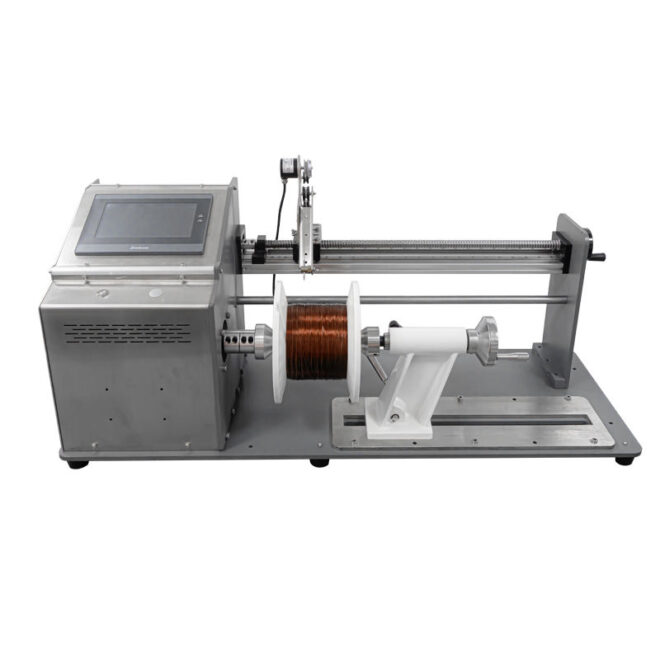
5 Best Benefits for Metal-Wire Process Control
1. Visual Touchscreen Setup
The touchscreen presents the approved operating values in a visual interface. Operators can review the selected job, speed and other enabled fields before starting. The final quotation should identify the available screen parameters, units, user levels and language. A clear interface supports repeatable setup, but it does not determine the correct values without an approved process.
2. PLC-Controlled Sequence
A PLC is listed as a core component. It coordinates the programmed winding sequence and the configured start, speed and stop logic. For a touchscreen wire winding machine, the PLC links the operator’s selected values to the machine cycle. External signals, counters or line integration are options that must be written into the final scope rather than assumed.
3. High-Power Motor Reference
The source describes a high-power motor intended for metal-wire winding. It does not publish a verified motor power rating or torque curve on the mapped page. BOYAN will identify the actual motor and drive in the quotation and review whether it suits the wire diameter, package inertia, fixture and required acceleration. “High power” is not used as a substitute for a sizing calculation.
4. Wide Listed Diameter Range
The stated reference range is 0.025 mm to 20 mm for various metal wires. This is a broad machine capability statement, not confirmation that one guide set or one speed works across the full range. Fine wire may require gentle contact and precise routing, while large wire may require different fixtures, bend control and lower safe speed. The quoted configuration must name the approved material and diameter window.
5. Automatic Speed Adjustment
Automatic speed adjustment during winding is identified as a feature. The mapped source does not establish the sensing method, feedback variable or control accuracy. BOYAN will clarify the actual speed logic for the final machine. If a buyer needs closed-loop control based on tension, package diameter or another measured value, that requirement must be provided separately.
Verified Reference Specifications
| Item | Reference information | Required confirmation |
|---|---|---|
| Model | ITC-PLC-70 | Final option and tooling revision |
| Machine weight | 60 kg | Installed configuration |
| Machine dimensions | 970 × 360 × 380 mm | Final outline and working clearance |
| Core components | PLC and motor | Motor, drive and electrical supply |
| Operator interface | Intelligent touchscreen | Fields, units, language and permissions |
| Reference speed | Up to 2400 r/min | Safe approved speed for material and fixture |
| Listed wire range | 0.025–20 mm metal wire | Actual alloy, temper, surface and diameter window |
| Speed function | Automatic speed adjustment | Control basis, limits and acceptance method |
| Reference packing | 103 × 44 × 49 cm; 80 kg gross | Final packing after options are fixed |
| Documentation | CE indicated for source configuration | Exact documents for the quoted configuration |
The reference packing values may change with fixtures, accessories and export protection. Final shipping data should be taken from the approved packing list, not from the early product-page reference.
How to Evaluate the 0.025–20 mm Range
A touchscreen wire winding machine requires a material-specific process window even when the diameter is within the listed range. Diameter alone does not define winding behavior. Alloy, temper, strand construction, surface coating, straightness and previous forming all affect how a wire passes through guides and builds on a package. The buyer should provide the actual material specification and samples from normal production.
At the fine end of the stated range, small contact marks, bends or snag points may be important. Guide finish, routing radius and payout behavior should be examined closely. A sample trial should inspect the surface and verify that the wire unwinds as intended after winding.
At the larger end, bending resistance and package inertia can become more significant. Fixture strength, core attachment, guide geometry and safe speed need to be reviewed. The touchscreen wire winding machine should never be approved for a large diameter solely because it falls inside a headline range.
Metal-Wire Data Needed for Selection
- Metal type, alloy and temper or hardness condition
- Solid, stranded, braided or other construction
- Nominal diameter and tolerance
- Coating, plating, insulation or surface-finish requirement
- Minimum allowable bend radius or forming restriction
- Supply spool size, weight, payout direction and brake method
- Finished core, reel, mandrel or package drawing
- Target package width, diameter, length or mass
- Required rotation speed and cycle time
- Acceptable surface, shape and winding-pattern criteria
- Voltage, frequency, phase and destination factory standard
- Available sample quantity for trial and acceptance
Send this checklist to yangle990706@gmail.com. The information lets BOYAN review the motor, fixture, guides and program together instead of treating the material as a generic “metal wire.”
Supply Spool and Payout Review
The winding machine is only one part of the material path. The supply spool must rotate or pay off in a controlled way that matches the wire and requested speed. Provide its flange diameter, barrel diameter, width, loaded mass and payout direction. Identify whether a separate stand, brake or powered payout is already available.
If the supply package releases unevenly, the receiving machine may not be able to correct the disturbance through speed adjustment alone. A project review should consider inertia, overrun, snag points and alignment between the payout, guides and receiving fixture. Any required payout device or signal interface belongs in the quotation.
Receiving Fixture and Package Geometry
The receiving core or mandrel determines how the wire begins, builds and is removed. Provide a drawing with mounting features, usable width, starting diameter, maximum outside diameter and attachment method. State whether the finished package remains on the core or must be removed after winding.
A touchscreen wire winding machine can store or execute settings only after the mechanical geometry is defined. If several cores are required, list each one and identify whether a quick-change fixture is needed. Tooling repeatability should be included in the acceptance plan.
Speed Planning up to 2400 r/min
The listed maximum of 2400 r/min is a reference machine capability. It is not the approved speed for every wire, core or package. As package diameter and mass increase, the rotating system changes. Material surface, guide contact, attachment and operator protection also affect the safe operating limit.
Begin a trial below the target maximum and observe start-up, steady winding and stopping. Increase speed only within the agreed process and machine limits. Record the program, material, fixture and package condition at each step. The highest stable result is not automatically the best production speed if surface condition or downstream unwind is worse.
The quoted acceptance test should state the target speed, test duration, sample material and allowed variation. If speed must change with package build, define the intended relationship and how it will be verified.
Automatic Speed Adjustment: Scope Questions
The source lists automatic speed adjustment but does not define whether it follows time, program stage, operator setting or a measured input. The buyer should explain the desired reason for adjustment. Examples include controlling surface speed, coordinating with payout or following a staged recipe, but no specific function should be assumed until the control method is confirmed.
If the process needs a sensor, tachometer, diameter estimate or external line signal, specify it. If tension is critical, provide the measurable range and permissible variation. BOYAN can then determine whether the reference control scope is sufficient or whether an additional device and program are required.
Touchscreen Program Design
The screen should show the parameters needed for the approved process and keep unrelated settings away from routine operators. Suggested job data may include material code, diameter, core, target speed, package limit and program revision. The actual fields and units should be agreed in the software scope.
Stored programs need controlled names and revision rules. Link each recipe to a material specification and fixture drawing. Restrict changes to authorized personnel where the process requires it. Before start, the operator should verify that the physical material and fixture match the selected program.
This workflow helps the touchscreen wire winding machine support repeat orders without implying that a stored setting guarantees quality on a changed wire lot or package.
Sample Trial Procedure
- Verify the material specification and record the sample lot.
- Inspect the supply spool and prepare the intended payout path.
- Install the approved guide set and receiving fixture.
- Load the wire using the documented contact and attachment points.
- Select the trial program and confirm rotation direction.
- Start at a controlled speed below the proposed limit.
- Observe feeding, guide contact, package build and speed changes.
- Inspect the wire surface, package geometry and attachment.
- Unwind a sample when downstream behavior is an acceptance criterion.
- Record settings and approve a recipe revision only after the result passes.
Trials should include enough cycles to evaluate repeatability. If a defect appears, document it before changing several settings. A controlled trial creates evidence for the quotation and factory acceptance test.
Factory Acceptance Test for Metal Wire
The factory acceptance test should use the agreed wire and fixture whenever practical. Confirm the touchscreen fields, PLC sequence, normal start and stop, automatic speed behavior and the approved target speed. Inspect the agreed package dimensions and surface criteria across the specified number of cycles.
For the touchscreen wire winding machine, measurable acceptance is more useful than generic “precision” claims. State how diameter, package width, speed, length or visual condition will be checked. Define which instrument is used and who supplies the test material.
Document the released program, tooling revision and accepted sample. Any change to wire, fixture or target after approval should be evaluated as a scope or process revision.
Safety Review for Rotating Metal Wire
Rotating fixtures and metal wire can create hazards that depend on diameter, speed and package condition. The final installation should be assessed for guarding, safe loading, loose ends, wire break response, fixture retention and emergency stopping. Local requirements and the site’s safety procedures apply.
Do not approach a rotating package or bypass a guard to correct the wire path. Define normal stopping and restart rules. Operators need training for loading, program selection, abnormal noise, loose wire, package damage and escalation.
The reference page’s maximum speed should not be used until the final machine, fixture and material have passed the agreed safety and process checks.
Installation Planning
The reference machine dimensions are 970 × 360 × 380 mm and the machine weight is listed as 60 kg. Use these values for preliminary planning only. The final outline drawing should confirm mounting, operator access, working clearance, material loading space and cable routing.
Provide the electrical supply before quotation. If a payout, counter, line controller or alarm must exchange signals with the machine, define each signal and response. A PLC provides a platform for control, but unlisted integration is not automatically included.
Commissioning and Operator Training
The touchscreen wire winding machine commissioning record should connect the approved material, tooling and program to the delivered configuration. Commissioning should confirm the delivered model, motor and drive, touchscreen fields, rotation direction, start and stop sequence, speed program, fixture and sample result. Verify that any agreed automatic speed function behaves according to the acceptance document.
Operator training should cover wire loading, guide inspection, fixture checks, recipe selection, permitted value changes, normal stopping, abnormal response and cleaning. Maintenance personnel need the final mechanical and electrical documentation and should record adjustments that could affect winding quality.
Quality Control and Traceability
Connect each finished package to the material lot, fixture and program revision when traceability is required. Inspect the package at a defined frequency. Surface marks, uneven build, loose turns or deformation should have a written response rather than an informal setting change.
For repeat orders, verify that the alloy, diameter, coating and supply spool match the released setup. If any of these change, review the process before reusing the old recipe. The ISO overview of quality management principles provides general context for controlled processes and evidence-based improvement.
Documentation and CE Confirmation
The mapped source identifies CE for the source configuration. A customized fixture, electrical option or destination requirement can change the documentation scope. BOYAN will list the declaration, manuals, labels, drawings and reports supplied with the exact quoted machine.
The commercial proposal should state the model, motor and drive, PLC, touchscreen, tooling, speed scope, approved wire range, electrical supply, accessories, packing and acceptance test. Request any mandatory certificate or document format before order confirmation.
Maintenance Planning
Inspect guides, fixtures, fasteners, cables and contact surfaces before production. Remove contamination using a method compatible with the wire coating or finish. Look for wear, grooves or alignment changes that could mark the wire or alter package build.
When performance changes, compare the current material, supply spool, fixture and program with the released reference. Record maintenance and program changes. Request a configuration-specific spare-parts list after the final build is approved.
Related BOYAN Winding Equipment
Browse the Winding Machines category for other architectures. If the primary requirement is pattern selection and stored recipes rather than the broad metal-wire range, compare the intelligent touch screen winding machine. These pages target different verified needs and should not be treated as interchangeable without application data.
Use our winding machine selection guide to compare control, material, package, speed, tension and application data before requesting a configuration.
Quotation Workflow
- Send wire data: alloy, construction, diameter, tolerance, coating and samples.
- Define the packages: supply spool, payout method, receiving core and maximum finished size.
- Set the process target: speed, cycle time, package form and inspection limits.
- Review configuration: motor, drive, guides, fixture, PLC, touchscreen and interfaces.
- Agree acceptance: test material, number of cycles, measurements and documentation.
Email yangle990706@gmail.com with “Touchscreen Wire Winding Machine Enquiry” in the subject. BOYAN will review whether ITC-PLC-70 is an appropriate base and what must be customized.
Frequently Asked Questions
What wire diameter range is listed?
The source states 0.025 mm to 20 mm for various metal wires. The approved range for a quotation depends on material, guide set, fixture, package and speed.
What is the maximum listed speed?
The source lists up to 2400 r/min. This is a reference capability, not the safe operating speed for every wire and package.
Does the machine automatically control tension?
The verified source lists automatic speed adjustment but does not establish closed-loop tension control. Provide the required tension range and measurement method if this function is needed.
What is the motor power?
The source describes a high-power motor but does not provide a verified rating on the mapped page. The quotation will state the actual motor and drive.
What are the machine dimensions?
The reference dimensions are 970 × 360 × 380 mm and the machine weight is 60 kg. Confirm the final outline after tooling and options are fixed.
Can different metal wires use the same program?
Not automatically. Alloy, temper, construction, coating and diameter can change winding behavior. Each approved recipe should be linked to the correct material and fixture.
Is CE documentation included?
CE is identified for the source configuration. Ask BOYAN to confirm the exact documents supplied with the quoted configuration.
How do I request a quote?
Send the wire specification, spool drawings, target speed, finished package, electrical supply and trial sample information to the enquiry email on this page.
Request a Touchscreen Wire Winding Machine Review
The touchscreen wire winding machine should be selected from the real metal wire, package geometry and measurable production target. BOYAN uses the verified ITC-PLC-70 reference to review motor sizing, guides, fixture, speed logic and acceptance evidence. Send a complete application package to receive a scoped email quotation rather than relying on a generic online-purchase description.
Reviews
There are no reviews yet.