
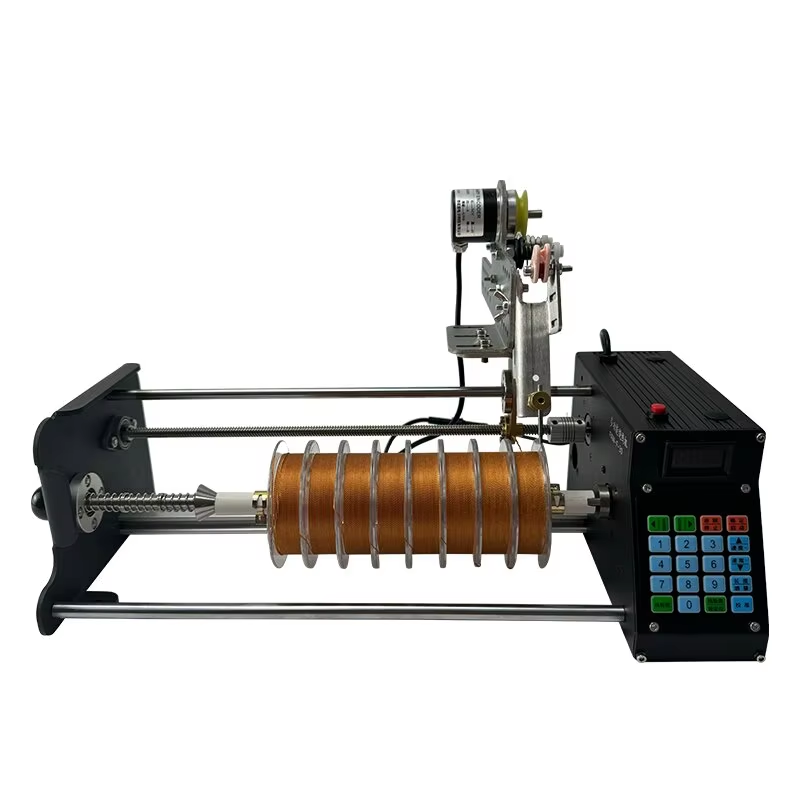
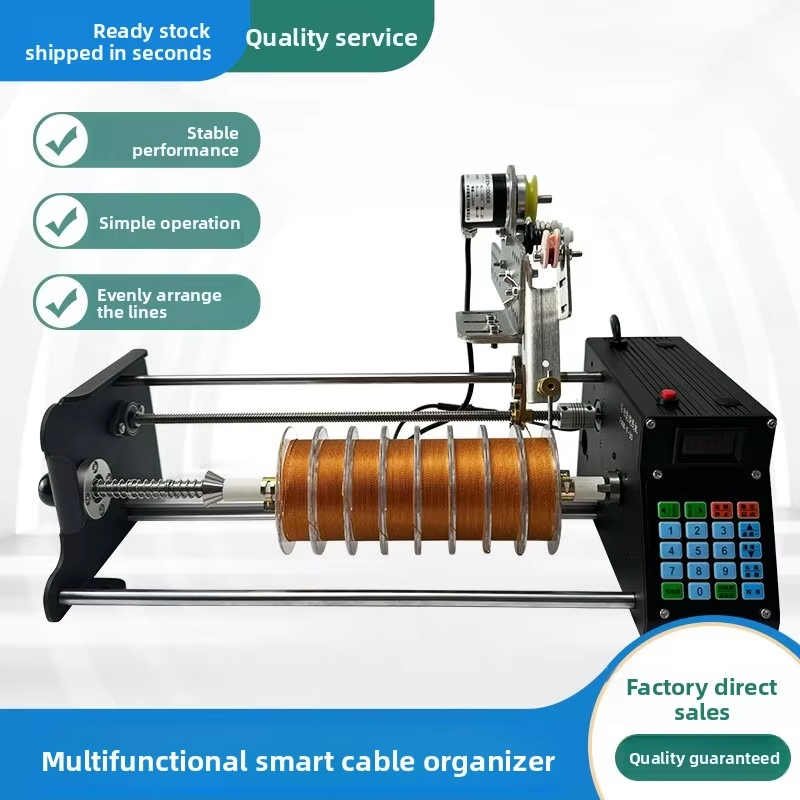
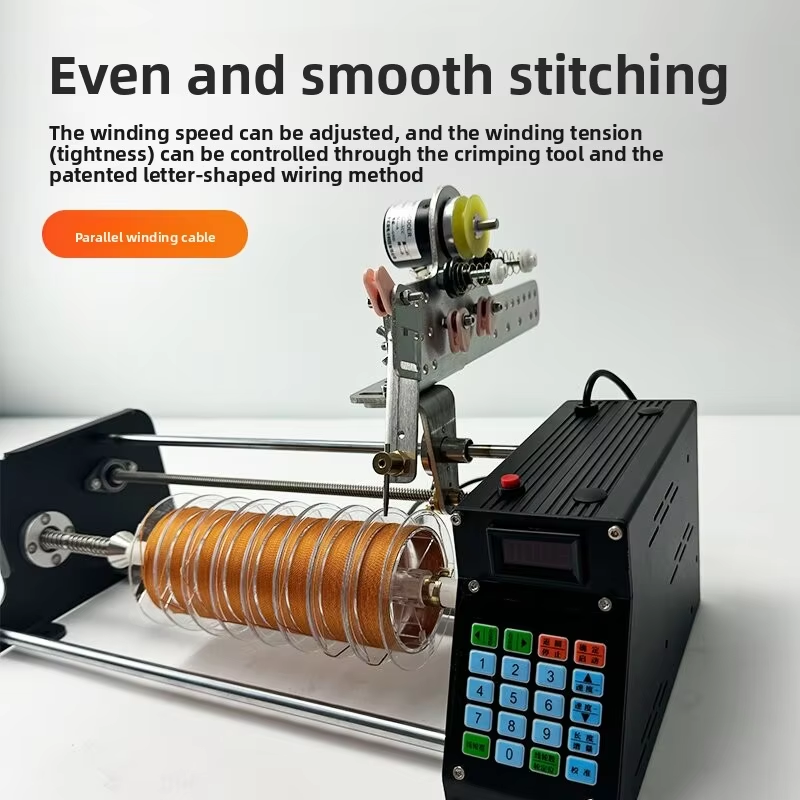
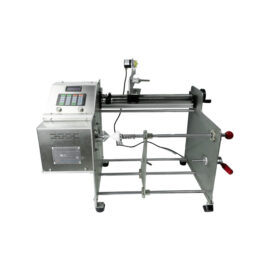
The automatic coil winding machine combines CNC metering, adjustable winding speed and a ceramic wire-contact path in a compact automated configuration. It is intended for approved coil-winding projects where the buyer supplies the material, coil geometry and output requirements for technical confirmation.
Automatic Coil Winding Machine Specifications
- Machine weight: 3.5 kg
- Machine dimensions: 700 × 260 × 300 mm
- Core components: motors
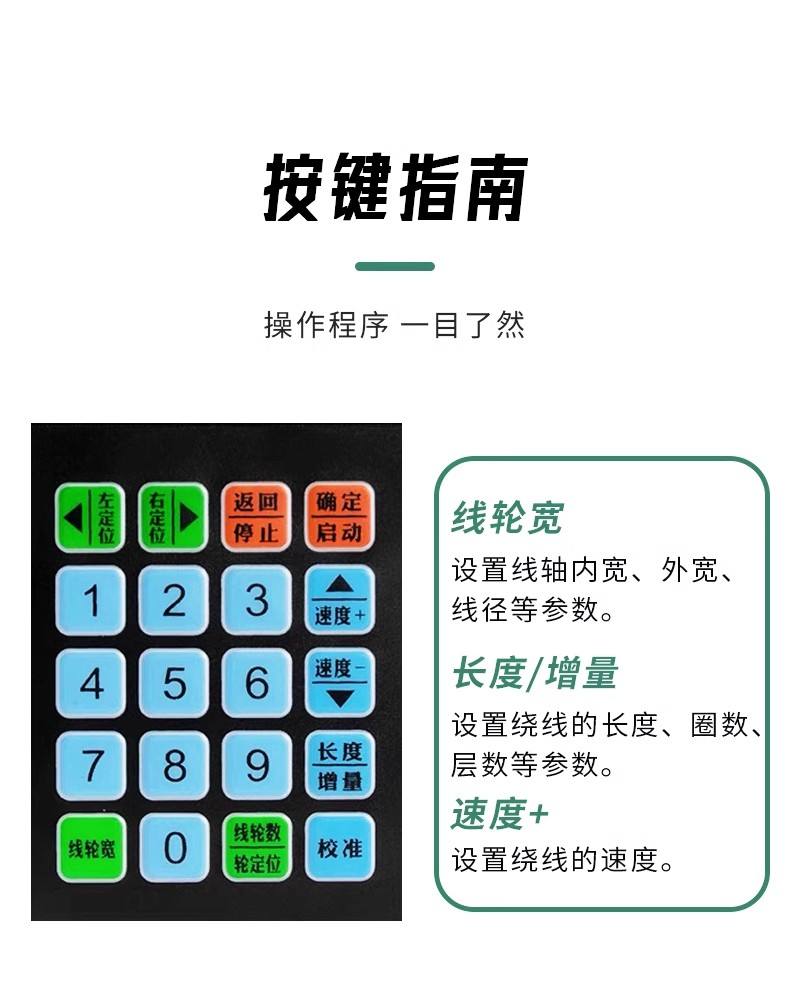
- Control: intelligent CNC metering
- Speed: adjustable winding speed
- Wire contact: ceramic contact component
- Design: customizable for the approved project
These values describe the documented configuration. The working range, tooling and control program must be matched to the actual wire and target coil before the machine is quoted.
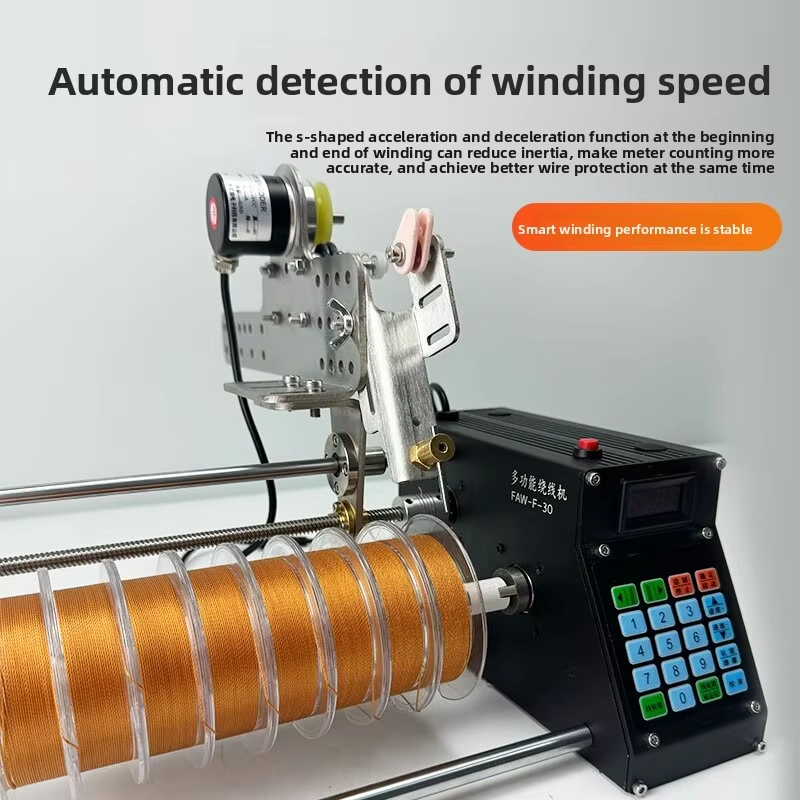
CNC Metering and Variable-Speed Control
The CNC control is documented for metering and winding operations. Variable-speed control allows the winding speed to be adjusted for the approved material and coil form. Actual accuracy and production rate depend on the wire, fixture, coil dimensions, acceleration settings and acceptance method; BOYAN confirms those values only after an application review.
Automation can reduce repeated manual setting steps, but it does not remove the need for correct loading, tooling alignment, operator training and production inspection.
Ceramic Contact and Emergency Stop
A ceramic wire-contact component is used on the documented machine to help provide a durable contact surface. Its suitability for delicate coatings or unusual wire materials should be verified with a sample test.
The machine also lists an emergency-stop function intended to help prevent wire damage during an abnormal winding condition. The function supplements, rather than replaces, suitable guarding and the operating procedures required for the installation.
CE Documentation and Project Scope
The source configuration is listed with CE documentation. Because tooling, controls and electrical scope can change when a machine is customized, buyers should request the applicable declaration and supporting documentation for the exact quoted configuration instead of assuming that one document covers every option.
Buyers placing machinery in the European market can review the European Commission’s official machinery overview when defining their own conformity responsibilities.
What BOYAN Needs to Confirm Fit
Send the wire material and diameter, supplied spool, target coil inner and outer diameter, winding width, length or turn count, required tolerance, production target, power supply and a drawing or finished sample. Also state whether the wire surface is easily scratched and whether a specific tension or traverse pattern is required.
BOYAN will use this information to confirm the winding path, fixture, program and acceptance test. Values that have not been agreed in the technical specification remain application-dependent.
Define the CNC Metering Requirement
The automatic coil winding machine should be evaluated against a defined measurement task. “Metering” can refer to length, turns or another controlled value, and the website description alone does not establish the buyer’s required method or tolerance. State what must be measured, where the reference begins and ends, and how the result will be checked on the finished coil.
Provide the target value, allowable variation and inspection method. If the coil is measured after removal, describe whether relaxation or material spring-back affects the result. If turns are the controlling quantity, mark the start and finish conditions on the drawing. BOYAN can then review how the documented CNC metering function should be configured for the approved project.
Accuracy must be connected to real material and tooling. Wire diameter, slip, feed resistance, acceleration, fixture geometry and operator handling can affect the finished result. For this reason, the automatic coil winding machine quotation should distinguish a documented control function from a project-specific acceptance value.
During a trial, record the program, material batch, fixture, target setting and measured result for several samples. A single good coil is not enough to describe repeatability. The agreed sample quantity and inspection method should be written into the technical scope before acceptance.
Wire and Coil Data Needed for Selection
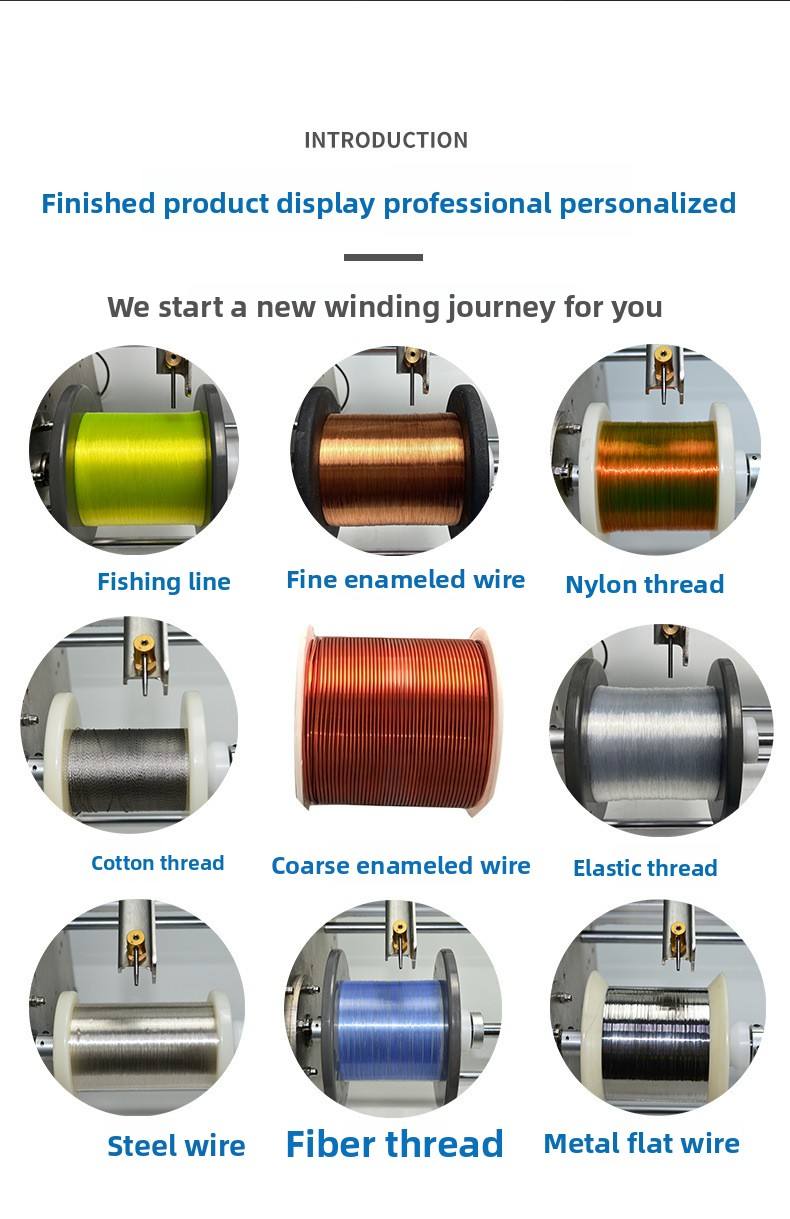
Start with the incoming wire. Identify the material, construction, diameter or cross-section, coating and normal production variation. Show the supply spool or reel, including its dimensions and feeding orientation. If the surface is easily scratched, the wire is flexible or the material has a minimum bend limitation, state that information clearly.
Next define the finished coil. Supply the inner diameter, outer diameter, winding width, turn count or length, number of layers, winding direction and lead positions. Mark the critical tolerances and identify any visual requirement. If the coil fits another component, attach the mating-part drawing so the tooling interface can be reviewed.
State the planned quantity per shift, number of coil variants and changeover frequency. These values help determine how the automatic coil winding machine will be used, but they do not create a guaranteed output. Actual cycle and output depend on loading, winding, unloading, inspection and any auxiliary steps.
If more than one wire or coil will run on the same machine, prepare a part matrix. List each material, drawing, fixture, program and acceptance reference. BOYAN can then identify which items are common and which require a project-specific change.
Evaluate the Ceramic Wire-Contact Path
A ceramic contact component is documented for this machine. Ceramic can provide a durable contact surface, but material compatibility must still be checked. Surface coating, wire hardness, diameter, contact angle, cleanliness and accumulated wear all influence how the wire behaves through the path.
For a surface-sensitive wire, send normal production samples and photographs of acceptable and unacceptable marks. Define whether light tooling contact is permitted or whether the visible surface has a stricter cosmetic standard. The trial should inspect the wire before winding, along the contact path and on the finished coil.
Keep the contact area clean and investigate any unexpected residue, scoring or resistance. Maintenance must follow the documentation supplied with the final configuration. Do not substitute contact components or change the wire path without a technical review because a small geometry change may affect feeding and measurement.
The automatic coil winding machine should be approved using the actual material condition. A sample with a different coating or diameter may not provide useful evidence for the intended production wire.
Validate Adjustable Winding Speed
Adjustable speed allows the process to be tuned for the approved material and coil. The correct setting is not simply the highest available value. Start-up behavior, steady winding, layer placement and stopping must all produce an acceptable coil without creating abnormal resistance or surface damage.
During development, test speed changes systematically and record the result. Keep the material, fixture and drawing constant while comparing approved settings. If acceleration or deceleration changes the coil shape or metered value, include those parameters in the controlled program reference.
For production, restrict unapproved changes to the stored recipe. Operators should select the program that matches the fixture and drawing, then verify a first-off coil. This lets the adjustable-speed function support repeatability instead of becoming an uncontrolled variable.
If higher output is required, evaluate the full cycle on the automatic coil winding machine. Include material loading, winding, finished-part removal and inspection. A faster winding segment may not increase total output when handling or quality checks determine the cycle.
Abnormal Resistance and Emergency-Stop Response
The documented emergency-stop function is intended to help prevent wire damage during an abnormal winding condition. It supplements proper guarding, correct setup and trained operator response. It must not be treated as the only safety or process-control measure.
If the machine stops because resistance rises, identify the cause before restarting. Check the supply spool, wire path, ceramic contact, fixture, coil buildup and selected program. Repeated stops may indicate material variation, misalignment, contamination, tooling wear or an unsuitable setting.
Record the event with the program, material batch and point in the cycle. This turns an interruption into useful process information. Any change to the emergency-stop behavior, electrical system or protective devices requires an approved technical review and the buyer’s workplace risk assessment.
Customization Scope and Documentation
The documented design is customizable, which means the machine can be reviewed for project-specific tooling, program and control requirements. Customization does not mean that every wire, coil or output target is automatically supported. The approved application must define what changes are included.
The automatic coil winding machine specification should list standard functions and project-specific items separately. Standard reference data includes CNC metering, adjustable winding speed, ceramic wire contact, emergency-stop functionality, a machine weight of 3.5 kg and dimensions of 700 × 260 × 300 mm. Tooling, wire guides, program logic and electrical options depend on the quoted project.
The source configuration is listed with CE documentation, but buyers should request the applicable declaration and scope for the exact machine being quoted. Customized tooling, controls and electrical options can affect what documentation applies. BOYAN will confirm the documents supplied with the final configuration rather than using a general website claim as the acceptance basis.
For installation in the European market, the buyer should also define its own integration and workplace responsibilities using current official guidance. The website link to the European Commission machinery overview provides a starting reference, while the contract and delivered technical file must identify the actual scope.
Plan the Sample Trial and Acceptance
A representative trial is recommended when metering, surface condition, coil removal or material behavior cannot be confirmed from drawings alone. Agree on the trial objective before shipping wire. The objective may include checking the wound dimensions, counting or length result, surface condition, lead position and repeatability across a defined sample quantity.
Send enough normal production material for setup and repeated samples. Label the material specification and link it to the coil drawing. If several diameters, coatings or hardness conditions are required, state the range and identify which condition is used for the initial test.
Use measurable acceptance criteria. Record the dimension, tolerance, measuring tool and timing of the inspection. For flexible coils, specify whether measurement occurs on the fixture, immediately after removal or after a defined period. For visual requirements, provide close-up references of accepted and rejected conditions.
The trial record for the automatic coil winding machine should include the machine program, fixture, material batch, drawing revision and sample results. A video can document the process and operator steps, but it should support rather than replace dimensional and visual evidence.
Prepare the Email Enquiry Package
Use a clear subject such as “Automatic Coil Winding Machine Enquiry – Wire – Coil Size.” State your company, installation country, intended application and project timing. Attach a dimensioned drawing, material specification, supply-spool photos and images of the finished coil.
Include the following information in one email:
- Wire material, construction, diameter or cross-section and coating
- Supply spool or reel dimensions and feeding orientation
- Target inner diameter, outer diameter, winding width, turns or length
- Winding direction, layer arrangement, lead positions and tolerance
- Required metering method and how the result will be inspected
- Surface condition and any restriction on scratching or deformation
- Quantity per shift, number of product variants and changeover frequency
- Installation voltage, frequency and destination country
- Sample availability and proposed acceptance evidence
Email the package to yangle990706@gmail.com. Complete data allows BOYAN to focus the reply on machine fit, customization, trial requirements, documentation and the commercial scope.
Quotation, Commissioning and Production Records
The quotation should reference the drawing or sample revision used for selection. It should identify standard functions, project-specific tooling, program requirements, electrical configuration and any value still subject to trial. If output is important, request a defined timing method using the agreed material and operator steps.
Before shipment, agree on the evidence to review for the automatic coil winding machine. Depending on the project, this may include sample measurements, photos, a trial video or an inspection record. The technical and commercial documents should refer to the same acceptance scope.
At commissioning, compare the delivered configuration with the approved specification. Verify the CNC metering setup, speed adjustment, ceramic contact path, fixture, program list and emergency-stop operation with authorized personnel. Run the approved wire and inspect a first-off sample before routine production.
Create a controlled record for every coil: program, fixture, material specification, drawing revision and accepted first-off sample. Record approved changes. If a new wire or coil is introduced, email BOYAN with the original machine reference and the new application data so compatibility can be reviewed.
When This Automatic Coil Winding Machine Fits
This automatic coil winding machine is a strong candidate when a project needs CNC metering, adjustable winding speed, ceramic wire contact, a compact documented configuration and customization based on an approved coil and wire.
A different BOYAN winding platform may be more appropriate when the project needs a substantially different supply arrangement, coil scale, traverse method, fixture or automation sequence. Compare machines using verified application requirements and sample results rather than product names alone.
BOYAN will separate documented features from project-specific commitments. The website supports Google discovery, while the email enquiry, drawing, trial record and final specification establish the configuration that can be quoted and accepted.
Questions to Close Before the Final Specification
Before approving the order, confirm what the CNC metering value represents and how it will be verified. Record whether the process controls length, turns or another value, the target and tolerance, the sample quantity and the measuring method. A clear definition prevents the control-screen setting from being confused with the finished-coil acceptance result.
Confirm which wire condition defines the project. Identify the material revision, coating, diameter range and supply package. If alternate materials may be introduced later, list them as future review items instead of assuming they are covered by the first trial. The automatic coil winding machine should be accepted against a controlled material reference.
Confirm every coil variant and the required tooling. A part matrix should show the drawing, winding direction, lead position, fixture and stored program for each product. Identify which parts require a sample test and which can be covered by an already approved arrangement.
Confirm the electrical configuration, destination and installation responsibilities. Reserve working space beyond the machine dimensions for the wire supply, operator, access, guarding and auxiliary equipment. The handling and connection method must follow the final packing and technical documentation.
Confirm the documentation package for the exact quoted configuration. Where CE documentation is required, request the applicable declaration and scope in writing. Also identify the operation, maintenance, program and acceptance records that will be supplied or created during commissioning.
Finally, confirm the enquiry and change-control contact. Keep the approved BOYAN quotation, machine reference, program list, drawings and trial evidence together. When a new coil is proposed, email the change package before altering tooling or control functions. This allows the automatic coil winding machine to remain tied to verified production requirements throughout its service life.
Frequently Asked Questions
Does the machine count winding length or turns?
The documented configuration includes CNC metering. Send the required measurement method and tolerance so the final control function can be confirmed.
Can winding speed be adjusted?
Yes. Variable-speed winding is a verified function, subject to the approved material and process window.
Why is a ceramic contact used?
It provides a durable wire-contact surface. Material compatibility should still be confirmed with an actual sample.
Is CE documentation available?
The source configuration is listed with CE. BOYAN will confirm the applicable document and machine scope for the final quotation.
Where can I compare other machines?
Use BOYAN’s Winding Machines category and selection guide. For custom flat-wire and small-coil work, compare the automatic wire winding machine.
Request a Technical Review
Email BOYAN at yangle990706@gmail.com with your coil drawing, wire specification and sample details. We will confirm machine configuration, controls, applicable documentation and the commercial specification before quotation. You can also use the contact page.
Reviews
There are no reviews yet.