

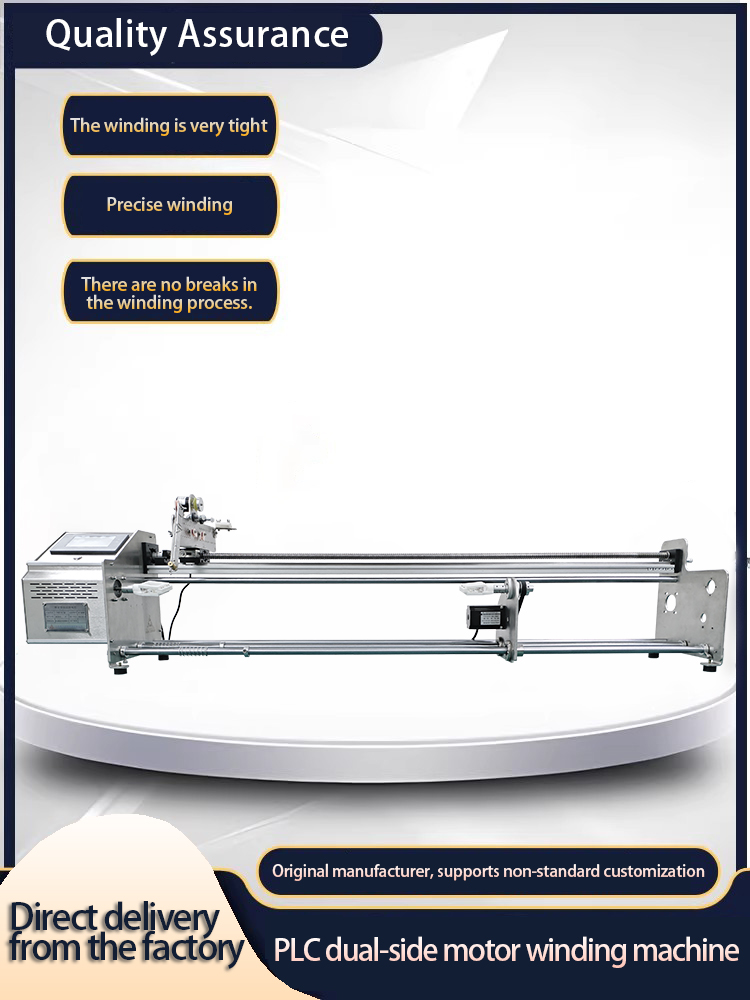
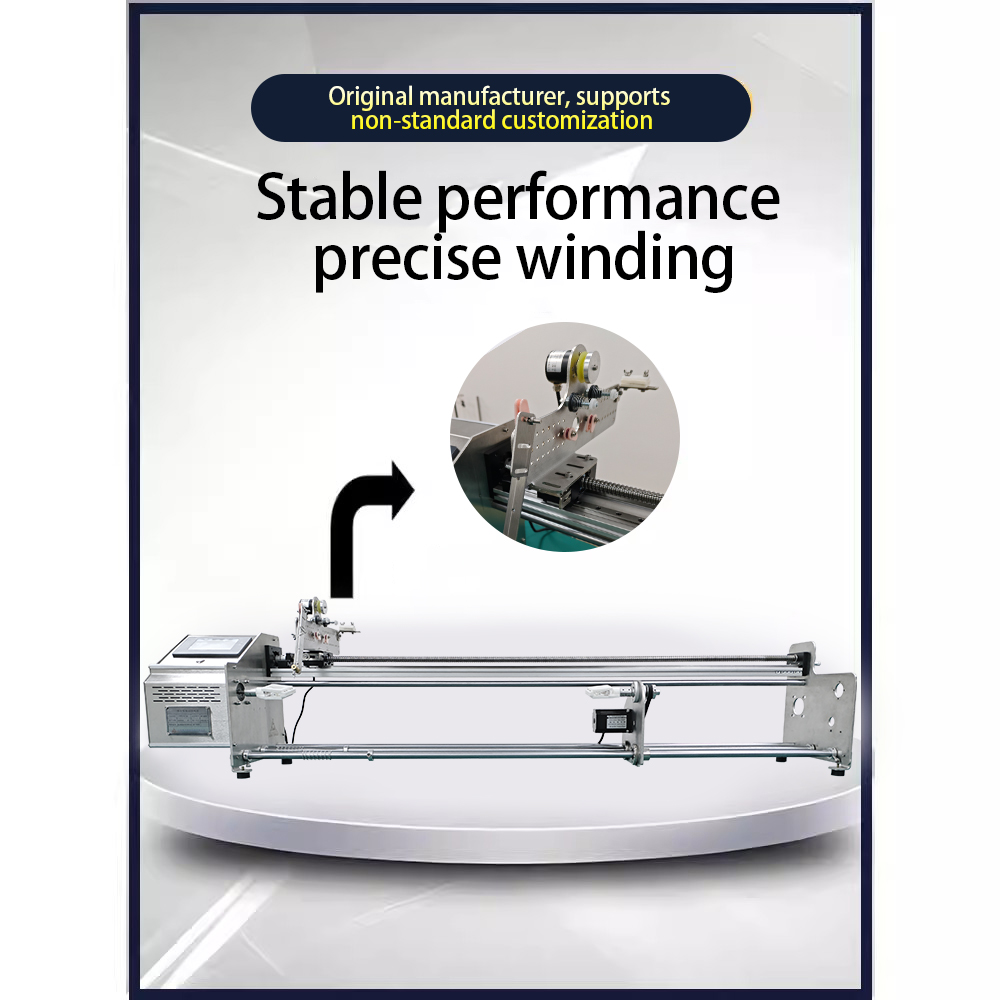
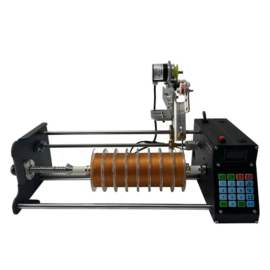
The automatic dual motor winding machine is designed for controlled, repeatable winding of compatible metal wires and other approved materials. Its dual-motor layout, touchscreen interface and adjustable winding-length settings support repeatable production while keeping the operator’s main settings in one interface.
Dual Motor Winding Machine Specifications
- Model: PWD-M-30
- Control: intelligent touchscreen interface
- Drive: dual-motor winding system
- Winding length: adjustable to suit the approved product specification
- Core component: motor
- Machine weight: 30.6 kg
- Machine dimensions: 1550 × 285 × 325 mm
Dimensions and weight are reference values for this configuration. BOYAN will confirm the final drawing and configuration before an order is placed.
Touchscreen Control and Adjustable Programs
The touchscreen provides a visual operating interface for the winding process. Winding length can be adjusted for the approved workpiece, and the control program can be tailored to the customer’s production requirement. This makes the machine suitable for projects where coil or wound-part geometry must be defined before production.
An emergency-stop function is included. The source specification states that the machine can stop when winding resistance increases, helping protect the material and equipment during an abnormal condition. This function does not replace correct setup, material trials or operator supervision.
Compatible Applications
The documented application range includes metal-wire work such as bracelet wire and heating wire. Other wire, cable or thread applications should be treated as project-specific until BOYAN reviews the material, diameter, stiffness, target coil size and required winding pattern.
- Metal-wire winding for approved coil or shaped-workpiece production
- Heating-wire winding after material and process confirmation
- Bracelet-wire processing where the required geometry matches the machine configuration
- Custom winding programs based on a supplied sample or technical drawing
What to Send for Machine Selection
For an accurate configuration, send BOYAN the wire material and diameter, target inner and outer diameter, winding width, length or turn count, required output, spool or fixture drawing, power requirement and photos or samples of the finished part. We will use these details to confirm whether the standard PWD-M-30 configuration is suitable or whether tooling and program changes are required.
How to Evaluate the Dual-Motor Winding Process
A useful machine review starts with the part, not with a catalogue name. The same wire can behave differently when the target inner diameter, outer diameter, winding width, number of layers or fixture changes. For that reason, the dual motor winding machine should be evaluated with the actual material specification and a drawing or finished sample. This lets BOYAN check whether the standard arrangement, a modified fixture or a customized control program is the appropriate starting point.
The first step is to define the incoming material. State the material type, diameter or cross-section, surface condition, supplied package and any limits on bending or marking. The next step is to define the finished wound part: required dimensions, winding direction, layer arrangement, lead position and acceptable visual condition. If a dimensional tolerance is important, mark it clearly on the drawing instead of relying on a photograph alone.
After the inputs are understood, the winding sequence can be reviewed. A typical project may require loading the material, locating the workpiece, setting winding length, running the approved program, stopping and removing the finished part. Actual fixtures and operator actions depend on the application. BOYAN will therefore confirm the sequence against the sample rather than promise an unsupported cycle or output figure.
The documented dual-motor design and touchscreen controls provide a foundation for repeatable settings. They do not remove the need for a controlled material supply, suitable tooling and a validated recipe. The best result comes from treating the machine, fixture, program, raw material and acceptance sample as one production system.
Configuration Checklist Before Quotation
Use the following checklist when requesting a technical review. Complete data allows the automatic dual motor winding machine to be assessed against the real task and reduces avoidable assumptions during quotation.
- Material: identify the wire or strip material, grade, coating and surface requirements.
- Size: provide diameter, width and thickness where applicable, including normal production variation.
- Incoming package: show the spool, reel, coil or other supply format and its dimensions.
- Finished geometry: provide inner diameter, outer diameter, winding width, length or turn count and lead details.
- Winding pattern: state whether the part is wound in a single layer, multiple layers or another defined arrangement.
- Production target: describe the required quantity per shift and the working pattern; output will be confirmed only after process review.
- Electrical requirement: state the installation country, available voltage and frequency for configuration confirmation.
- Acceptance criteria: identify the dimensions, appearance and functional points that determine whether a sample is acceptable.
- Reference files: attach clear drawings, photos, video and physical samples when available.
If more than one product will run on the same machine, list each part separately. A shared platform may still require different fixtures or stored programs. BOYAN can then distinguish common machine functions from product-specific tooling before the final specification is issued.
Sample Trial and Acceptance Method
A sample trial is recommended when material behavior or finished geometry cannot be confirmed from documents alone. Send representative production material, not only a short substitute with different stiffness or surface condition. The trial objective should be agreed in advance: for example, verifying the winding shape, checking that the material is not visibly damaged and confirming that the approved program can be repeated.
Record the approved setup so it can be reproduced. The record may include the program reference, winding-length setting, fixture identification, material batch, finished-sample drawing and inspection result. The touchscreen and customizable program help manage settings, but the buyer should still control program revisions and restrict unapproved changes during production.
Acceptance should use measurable criteria wherever possible. Compare the wound part with the approved drawing or sample, check the dimensions that matter to downstream assembly and inspect the material contact area. If a point cannot be measured reliably, define a visual reference and sampling method before the machine is released.
The emergency-stop response associated with increased winding resistance is an equipment-protection feature, not a substitute for process validation. During trial, confirm how the approved material feeds, how the fixture holds the part and how the operator responds to an abnormal stop. Any safety procedure must be based on the delivered configuration and the buyer’s workplace risk assessment.
Installation, Changeover and Routine Care
Before installation, reserve space for the machine dimensions of 1550 × 285 × 325 mm and allow additional working room for material handling, the operator and any guarding or auxiliary equipment. The stated machine weight is 30.6 kg, but the final handling method should follow the delivered packing and installation instructions. Confirm the floor or bench arrangement, electrical supply and access route before shipment.
At commissioning, verify the delivered configuration against the approved specification. Check the touchscreen functions, program selection, winding-length adjustment, fixture condition and emergency-stop operation with authorized personnel. Run the approved sample material before releasing the dual motor winding machine for normal production.
For a changeover, identify the correct program and tooling before loading material. Remove leftover material, inspect the guide path and confirm that the new part drawing matches the selected recipe. A first-off sample should be checked before the batch continues. This is especially important when parts have similar names but different diameters, lengths or winding directions.
Routine care should follow the operation and maintenance information supplied with the final machine. As general process discipline, keep material-contact areas clean, inspect fixtures and guides for wear, and investigate abnormal resistance instead of repeatedly restarting the machine. Do not change electrical, control or safety components without an approved technical review.
Keep a simple production record for repeat work: machine program, tooling reference, material specification, first-off result and any approved adjustment. These records help operators return the automatic dual motor winding machine to a known setting and make later troubleshooting more precise.
When This Dual Motor Winding Machine Is a Good Fit
This configuration is a strong candidate when the project needs touchscreen setting, adjustable winding length, a dual-motor system and a customized program for a confirmed metal-wire application. The documented bracelet-wire and heating-wire examples provide useful reference points, but they do not automatically qualify every material with a similar name.
A different BOYAN winding platform may be more suitable if the application requires a substantially different wire path, spool arrangement, metering method, coil geometry or level of automation. Comparing machines by verified process requirements prevents a lower headline price or a familiar product name from driving the wrong selection.
Send the complete application data for a fit review. BOYAN will separate verified standard features from project-specific options and will identify any points that require a material test. This approach gives the buyer a clear technical basis for quotation, sample approval and final acceptance.
Prepare a Complete Email Enquiry Package
The fastest route to a useful quotation is a single email that combines commercial context with technical evidence. Use a clear subject such as “Dual Motor Winding Machine Enquiry – Material – Finished Part.” In the message, identify your company, installation country, intended application and requested delivery timing. Attach the technical files described below and state which items are confirmed and which are still under development.
Start with a dimensioned drawing of the finished wound part. A PDF is easy to review, while a native CAD file can be helpful when tooling must match a detailed profile. Mark the critical dimensions and tolerances instead of applying the same tolerance to every feature. If a drawing is unavailable, place the part beside a scale and photograph it from multiple directions, then label the required dimensions in the email.
Include information about the incoming material. A specification sheet should identify the material, size, coating and allowable condition. Photos should show both the material and its supply spool or reel. If the material is easily scratched, bent or stretched, say so directly. These details influence the guide path, fixture review and the trial method for the dual motor winding machine.
Describe the planned production pattern without inventing a guaranteed machine output. State the number of parts required per day or shift, the number of product variants and the expected frequency of changeover. BOYAN can then review whether the documented PWD-M-30 platform is a suitable basis and which results need to be demonstrated during a sample test.
Before sending physical material, request confirmation of the sample quantity, packing method and delivery address. Label each material and reference it to the drawing or part number in the email. Keep a duplicate sample so both parties can compare the same acceptance standard during the technical discussion.
Drawing and Sample Review Points
A winding drawing should communicate more than the overall outside size. Show the inner diameter or mandrel interface, winding width, number of layers where relevant, starting and finishing lead positions, winding direction and the area that must remain free of material. If the part fits into another assembly, identify the mating surfaces that are critical after winding.
For bracelet wire, heating wire or another approved metal-wire project, state whether the material may show normal tooling contact or whether the visible surface has a stricter cosmetic requirement. Attach close-up photographs of an accepted sample and an unacceptable sample when appearance is difficult to describe. This gives the technical review a clearer reference than general terms such as “good quality.”
Samples should represent normal production variation. A perfect laboratory sample may not reveal the variation found in regular coils of raw material. If more than one diameter, coating or hardness will be processed, identify the range and provide representative material for each condition. BOYAN can then confirm which condition is used for the initial trial and whether the same program and tooling can cover the full family.
When the finished part is flexible, specify how it should be measured. State whether measurement occurs while the part is on the fixture, immediately after removal or after a defined relaxation period. The agreed method should be recorded because flexible products can give different readings when handled differently.
What the Technical Quotation Should Confirm
A useful dual motor winding machine quotation should separate standard documented features from project-specific items. The standard reference includes model PWD-M-30, touchscreen control, a dual-motor arrangement, adjustable winding length, the stated machine size and weight, customizable programming and the documented emergency-stop response. Tooling, fixtures, auxiliary material handling and special program logic should be listed according to the reviewed application.
Check that the quotation identifies the sample or drawing revision on which the selection is based. It should also identify the electrical configuration to be supplied and any input still awaiting confirmation. If the application contains several parts, request a simple matrix showing which tooling and program belong to each part number.
Do not treat an estimated output as a universal specification. Cycle and output depend on the material supply, winding geometry, operator actions, loading and unloading, inspection and any auxiliary steps. If output is a purchase criterion, request a trial method using the agreed sample and define exactly which steps are included in the timing.
Document the acceptance evidence required before shipment. Depending on the agreed scope, this may include photos, sample measurements, a trial video or an inspection record. The final requirement must be written into the approved commercial and technical documents rather than assumed from general website content.
Production Records for Repeatable Results
For the dual motor winding machine, once a configuration is accepted, assign a controlled reference to the machine program, fixture and finished-part drawing. Record the material specification and approved first-off sample. Operators should be able to match these items before each batch starts. This reduces the risk of running the correct material with the wrong recipe or using similar tooling for a different product.
Create a first-off inspection step after setup or changeover. The check should focus on the critical dimensions, winding arrangement, lead position and visible material condition defined during approval. Production can continue when the sample meets the agreed criteria; an out-of-limit result should trigger a controlled review rather than an unrecorded adjustment.
Track abnormal stops and process changes. If increased resistance triggers the emergency-stop response, record the material, fixture, program and point in the cycle before restarting. Repeated resistance may indicate a feeding, guiding, tooling or material issue that needs investigation. The stop function protects the process only when the cause is understood and corrected.
For repeat orders or new product variants, email BOYAN with the original machine reference and the new drawing. This allows the change to be reviewed against the delivered dual motor winding machine. A new fixture or program may be sufficient, but compatibility should be confirmed before production material is committed.
Questions to Answer Before Emailing BOYAN
- What exact material and size will be wound in normal production?
- What dimensions and tolerances define an acceptable finished part?
- How is the material supplied to the machine, and what are the spool or reel dimensions?
- Which surface marks, deformation or lead-position variations are unacceptable?
- How many distinct products must the machine run, and how often will changeover occur?
- What voltage and frequency are available at the installation site?
- Is a physical sample available for a trial, and does it represent normal production material?
- What evidence must be reviewed before shipment and final acceptance?
Answering these questions gives the BOYAN team the information needed to evaluate the application. Email the package to yangle990706@gmail.com. The response can then focus on machine fit, required customization, sample testing and the next technical step instead of repeating basic data requests.
Frequently Asked Questions
Can the winding length be adjusted?
Yes. Adjustable winding length is a documented feature. The practical range for your product must be confirmed against the required coil geometry.
Which materials can this machine wind?
The verified examples include bracelet metal wire and heating wire. Send the material grade, diameter and stiffness for other applications so compatibility can be checked.
Does it support a custom program?
Yes. The program can be customized to the stated winding requirement. Final functions depend on the approved specification.
What happens if winding resistance rises?
The documented emergency-stop function can stop the machine when resistance increases. Correct setup and a production trial are still required.
How do I compare it with other BOYAN machines?
Review the BOYAN Winding Machines category and the winding machine selection guide. For a related CNC-controlled option, see the fully automatic coil winding machine.
Process Limits and Acceptance
This dual motor winding machine should be selected around the actual material and finished-part geometry, not by product name alone. Before shipment, the agreed configuration should be checked against the approved sample or drawing. The operator must use suitable guarding, fixtures and operating procedures for the material being wound. Output rate, allowable wire range and final tolerances are application-dependent and will be stated only after BOYAN reviews the process data. Buyers placing machinery in the European market can also review the European Commission’s official machinery overview when defining their compliance responsibilities.
For repeat orders, retain the approved program, tooling reference and sample. This gives the dual motor winding machine a defined production target and reduces setup variation between batches.
Request a Configuration Review
Email BOYAN at yangle990706@gmail.com with your material, drawing, sample photos and finished-part requirements. We will review machine fit, tooling, control functions and the final commercial specification before quotation. You can also use the contact page if you prefer the website enquiry form.
Reviews
There are no reviews yet.