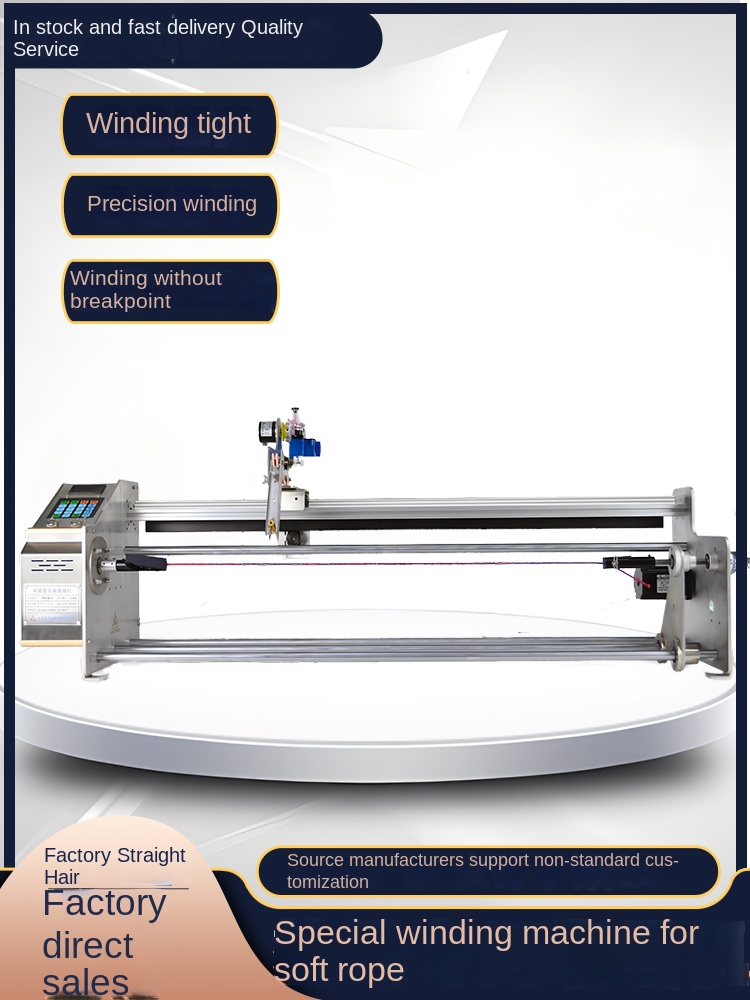

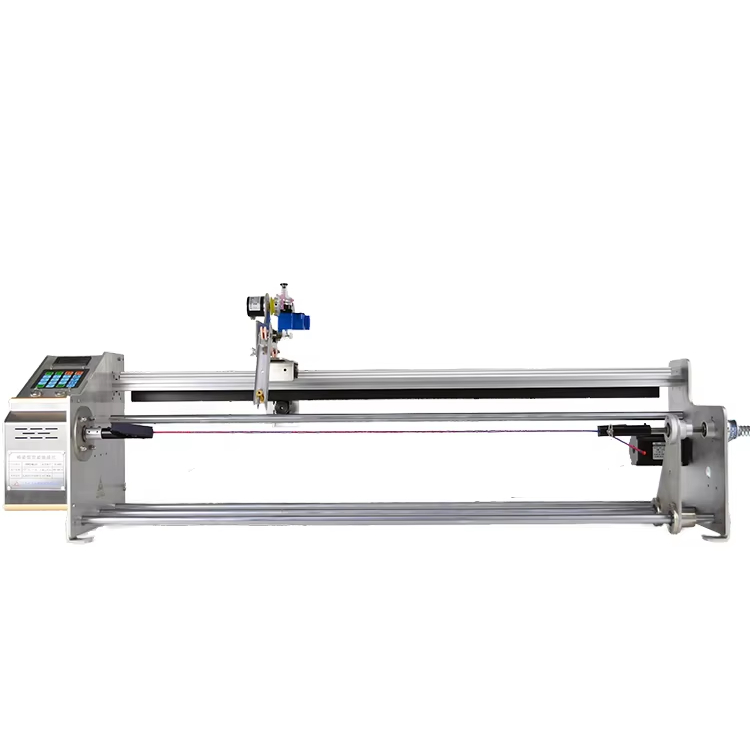
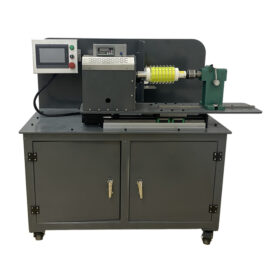
Automatic bracelet winding machine is a BOYAN motor-driven platform for bracelet cord, metal wire, heating wire and other compatible products that fit the confirmed 5 mm maximum line-diameter reference. The verified record lists model PWD-M-30, a machine weight of 27.6 kg, a working speed of 5–1000 r/min and a dimension field of 1330 × 410 × 430. The unit for that field is not explicitly stated and must be confirmed on the final drawing.
The source title describes automatic bracelet winding, twist-rod processing and parallel-roller winding, with a CE claim. Those labels do not define every mechanism or finished bracelet design. Send product drawings, material data, supply and take-up details and an accepted sample to yangle990706@gmail.com. BOYAN will confirm the process and acceptance method before quotation.
Automatic Bracelet Winding Machine: Quick Selection Guide
An automatic bracelet winding machine may suit a project when the material, product geometry and winding cycle fall within a confirmed setup. This model has unusually useful source data: 5–1000 r/min, maximum 5 mm line diameter, 27.6 kg machine weight and named bracelet cord, metal wire and heating wire materials. Speed and diameter still need to be verified under the actual load and quality criteria.
- Model: PWD-M-30.
- Machine weight: 27.6 kg.
- Working speed reference: 5–1000 r/min.
- Maximum line diameter reference: 5 mm.
- Named materials: bracelet cord, metal wire and heating wire.
- Core component: motor.
- Source process terms: twist-rod processing and parallel-roller winding.
The source does not publish motor rating, torque, voltage, tension, product diameter, roller dimensions, twist pitch, control type or production rate. Those fields remain part of the engineering review.
Verified Data and Conflicting Packing Records
| Item | Available reference | BOYAN confirmation |
|---|---|---|
| Model | PWD-M-30 | Final model and nameplate |
| Machine weight | 27.6 kg | Net weight of supplied build |
| Dimension field | 1330 × 410 × 430; unit not stated | Units and approved outline drawing |
| Core component | Motor | Motor rating, drive and controls |
| Speed | 5–1000 r/min | Usable range with selected product |
| Maximum line diameter | 5 mm | Material-specific compatibility and tolerance |
| Named materials | Bracelet cord, metal wire, heating wire | Grade, mechanical behavior and sample result |
| Carton record A | 1320 × 420 × 420 mm / 44 kg including box | Corrected final packing drawing and gross weight |
| Package record B | 12.3 × 44 × 46 cm / 40.6 kg | |
| CE statement | Claimed in source title | Documents, model scope and destination rules |
The two shipping records conflict, and 12.3 cm is implausible for a machine with a 1330 dimension field. BOYAN does not guess that 12.3 should mean 123. A corrected packing drawing and final weight are required before freight planning. The 1330 machine field being slightly longer than the 1320 carton field also requires confirmation.
Bracelet Cord, Metal Wire and Heating Wire
The named materials cover very different engineering conditions. Bracelet cord may be braided, elastic, textile-covered or decorative. Metal wire may be springy, work-hardening, coated or prone to kinking. Heating wire may have resistance, alloy, surface and bend-radius requirements that affect tooling and quality.
A 5 mm maximum diameter is a reference ceiling, not proof that every material up to 5 mm will wind successfully. Stiffness, minimum bend radius, tensile behavior, surface sensitivity and spool mass can be more limiting than diameter. The automatic bracelet winding machine should be tested with production-representative material.
- Material grade, construction and supplier specification.
- Nominal and maximum diameter or width.
- Elasticity, springback and minimum bend radius.
- Surface coating and allowable marks.
- Electrical resistance and insulation requirements for heating wire.
- Representative samples, including difficult lots.
Twist-Rod and Parallel-Roller Process
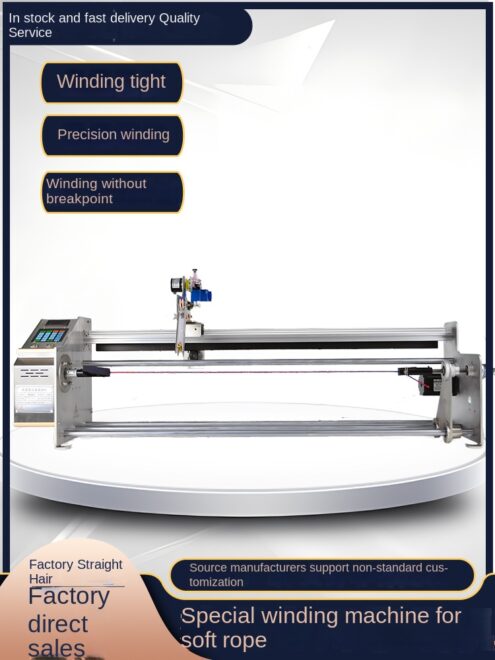
The source title associates this model with twist-rod processing and a parallel-roller winding machine. A proposal should explain whether the rod is a product core, forming mandrel, torsion element or another workpiece. The title alone does not specify twist angle, torque, roller pressure or synchronization.
If parallel rollers guide or form the product, provide required roller contact, spacing, material path and surface finish. Metal wire may require hardened or shaped rollers, while decorative cord may need smooth low-pressure contact. BOYAN will confirm the actual mechanism and included tooling.
For an automatic bracelet winding machine, the finished product may be a closed bracelet, a wound section prepared for later closure or a wire form. State how the ends are cut, joined, tied, welded, crimped or otherwise finished. These functions are not confirmed standard equipment.
Product Geometry and Tooling
Provide bracelet inside diameter, outside diameter, cross-section, winding width, wrap count, pitch, layers, closure and allowed springback. If the machine produces a straight torsion-bar or roller-wound component rather than a closed bracelet, provide a separate drawing and cycle.
Tooling must retain the product at up to the agreed speed without slippage or ejection. Maximum mass, balance, shaft interface and guard clearance matter. The source does not publish a product-size range or spindle capacity.
When several sizes share one automatic bracelet winding machine, list minimum, maximum and most difficult variants. Change parts and settings should be documented by product.
Using the 5–1000 r/min Range Correctly
The published 5–1000 r/min range is useful but should not be treated as the guaranteed operating speed for every job. A large bracelet or stiff wire produces different line speed, inertia and stored energy from a small soft cord. Maximum safe and stable speed depends on tooling, balance, material and guarding.
Begin trials at low speed. Observe supply behavior, roller tracking, product retention, wire springback and surface condition. Increase speed only while the finished product meets dimensional and appearance criteria. Record the accepted rate with the actual material and fixture.
Acceleration and braking may be more important than peak speed. Sudden changes can loosen cord, distort a bracelet or release stored energy in metal or heating wire.
Five Applications to Evaluate
1. Cord Bracelet Winding
The source material field names bracelet cord. Provide cord construction, elasticity, pattern, core and closure for a sample trial.
2. Metal Wire Bracelet Forming
The automatic bracelet winding machine may be evaluated for compatible metal wire up to the confirmed range. Alloy, temper, springback and bend radius are essential inputs.
3. Heating Wire Coiling or Forming
Heating wire is named in the source. The buyer should define alloy, diameter, resistance, pitch, mandrel and allowable surface damage. Electrical performance must be tested separately.
4. Twist-Rod Processing
The source title includes twist-rod processing. Provide rod geometry, twist requirement, torque and end condition so the actual operation can be confirmed.
5. Parallel-Roller Winding
Products requiring roller-guided parallel winding can be reviewed from drawings and samples. Roller design and pressure are application-specific.
Tension, Torque and Product Quality
The old page claimed uniform tension and precise shaping, but no tension or torque range is published. For cord, define desired tightness and size after relaxation. For wire, define springback, diameter, pitch and allowable deformation. For heating wire, include resistance and insulation checks.
A measurable acceptance plan may include bracelet diameter, pitch, number of turns, end position, surface marks, springback after a stated time and pull or torque test. The automatic bracelet winding machine should be approved by those outputs rather than by a general precision claim.
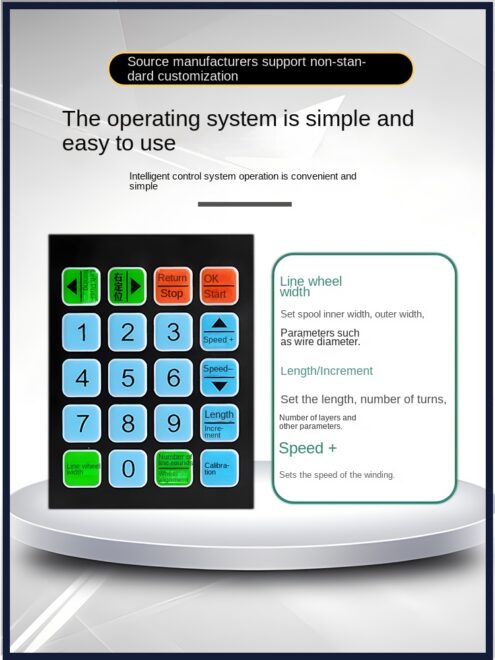
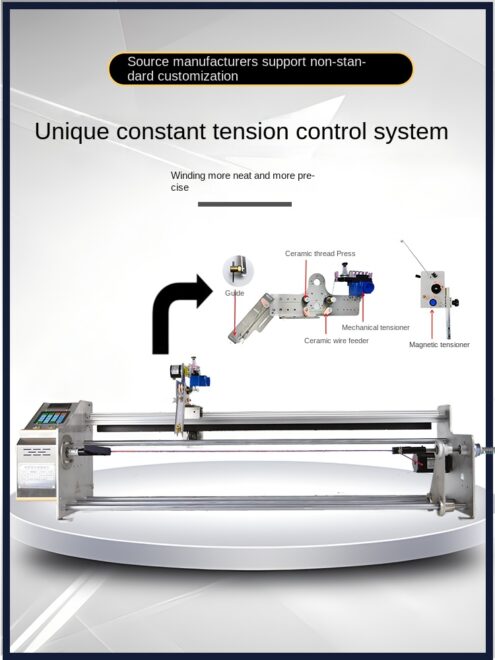
If active tension control is required, state the range, unit, measurement point and response. BOYAN will identify the appropriate device and whether it is standard or optional.
Automation Boundary and Finishing
“Automatic” in the source title does not describe loading, feeding, cutting, joining or unloading. Map every step from raw material to accepted product. Identify what the operator loads and removes, how the material is anchored, whether it is cut, and how a bracelet is closed.
For wire products, cutting, crimping or welding can be separate processes. For cord products, tying, sewing, adhesive or heat finishing may be required. None should be assumed as included unless the proposal says so.
Output is accepted finished pieces per hour, including operator work and changeover. Record faults, rework and rejected parts during the trial.
CE Claim and Documentation
The source title includes a CE claim and the page displays an EU-compliance label. Before relying on it, request the applicable declaration, certificate or test record, verify model coverage and review destination requirements. Tooling or control modifications may affect the documented scope.
BOYAN will identify available documents for the ordered automatic bracelet winding machine. This page does not convert a marketplace label into independent compliance evidence.
Safety and Risk Assessment
Rotating mandrels, rollers, wire and products create entanglement, pinch, impact and stored-energy hazards. Metal and heating wire can whip or spring outward. Appropriate guards, emergency stops, setup procedure, electrical isolation and training are required.
The risk assessment should cover loading, threading, roller adjustment, winding, jam clearing, cutting, product removal and maintenance. General principles appear in the OSHA machine-guarding guidance; local rules govern the final installation.
Never hold wire or cord by hand near rotating rollers. Stop and isolate the automatic bracelet winding machine before adjustment or fault clearing.
Recommended Sample Trial
- Identify the product: approve drawing, material and finished sample.
- Verify the material: record grade, diameter, springback and condition.
- Install tooling: check mandrel, rollers, retention and guard clearance.
- Define acceptance: agree dimensions, pitch, surface, ends and output.
- Run at low speed: observe feed, tracking, retention and deformation.
- Increase gradually: establish a stable rate within 5–1000 r/min.
- Finish the product: complete the agreed cut or closure process.
- Condition and inspect: measure springback or relaxation after the agreed time.
- Repeat: run multiple cycles and a normal product change.
Factory Acceptance Checklist
- PWD-M-30 model, 27.6 kg weight and outline field are verified.
- Motor, drive, controls and destination electrical ratings are recorded.
- 5–1000 r/min function is checked with the agreed product.
- Maximum 5 mm reference and included material range are documented.
- Twist-rod or parallel-roller process matches the approved scope.
- Tooling fits the buyer’s minimum and maximum products.
- Guards, emergency stops and restart behavior are demonstrated.
- Dimensions, appearance, springback and electrical criteria meet acceptance.
- Cycle time, operator work, rejects and changeover are recorded.
- Manuals, drawings, parts, documents and open actions are listed.
- Conflicting packing records are replaced by verified final data.
Information Needed for a Proposal
- Bracelet, coil, twist-rod or roller-wound product drawing.
- Material grade, construction, diameter, properties and sample.
- Mandrel, roller, pitch, layers, ends and closure requirements.
- Minimum and maximum product sizes.
- Required speed, output, shifts and batch size.
- Dimensional, visual, mechanical and electrical acceptance criteria.
- Manual and automatic cycle steps.
- Voltage, phase, frequency, destination and plant standard.
- Guarding, controls, documentation and commissioning needs.
- Delivery address and schedule.
Email the package to yangle990706@gmail.com. BOYAN will confirm material fit, tooling, automation and acceptance.
Compare Related BOYAN Machines
For decorative cheongsam-button and cord patterns, review the frog button winding machine. For circular hair-tie products, review the fully automatic ring winding machine. Each machine has a different workpiece and source specification.
Browse the BOYAN winding machines category for related equipment.
Use our winding machine selection guide to compare control, material, package, speed, tension and application data before requesting a configuration.
Frequently Asked Questions
What is the maximum line diameter?
The source lists a 5 mm maximum. Material stiffness, bend radius and tooling still determine actual compatibility.
What speed range is published?
The source lists 5–1000 r/min. The accepted operating range is verified with the selected product and guard configuration.
Which materials are named?
Bracelet cord, metal wire and heating wire are named. The buyer should provide grade, diameter and samples.
Does it include PLC and servo control?
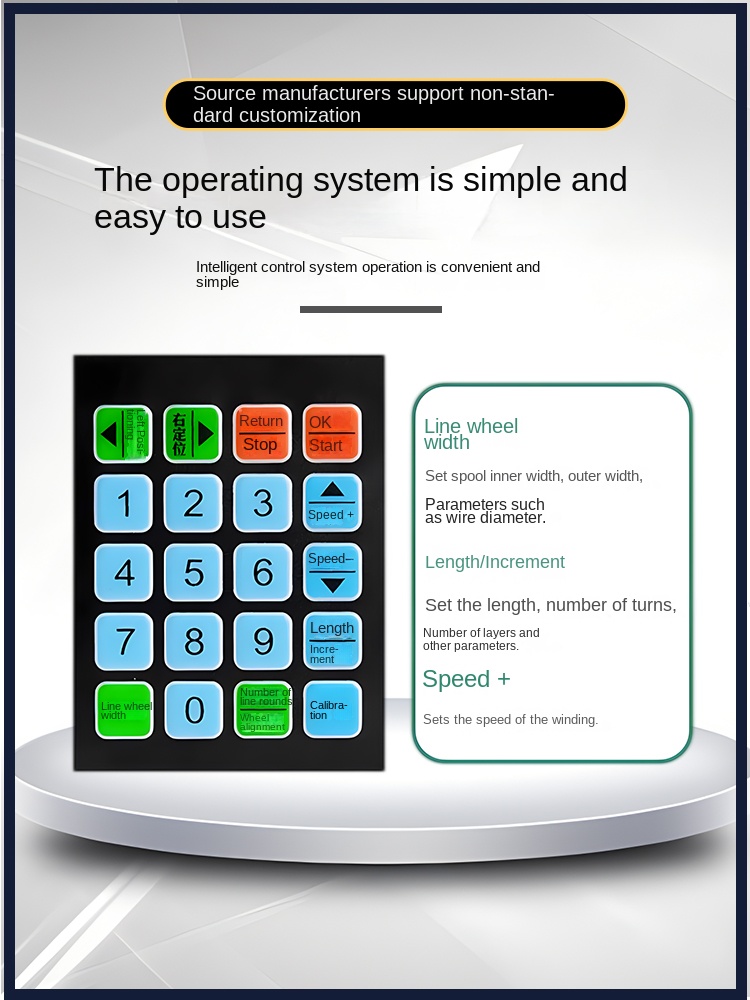
The verified core component is a motor. PLC, servo and touchscreen are not confirmed and must be stated in the proposal if required.
Does it cut and close bracelets automatically?
No cutting or closure mechanism is published. Define cutting, joining, crimping, welding, tying or bonding as separate requirements.
Which packing dimensions are correct?
The source contains two conflicting records. BOYAN will provide a corrected packing drawing and final gross weight before shipment.
Is CE documentation available?
The source title carries a CE claim. Applicable documents and model coverage must be reviewed for the final configuration.
Request a Bracelet-Winding Review
Send the product drawing, material sample, diameter, pitch, mandrel or roller requirements, ends, closure, output and destination power. BOYAN will determine whether PWD-M-30 is the right basis and define the test.
Contact yangle990706@gmail.com for an automatic bracelet winding machine proposal based on verified source data and a written acceptance plan.

Reviews
There are no reviews yet.