
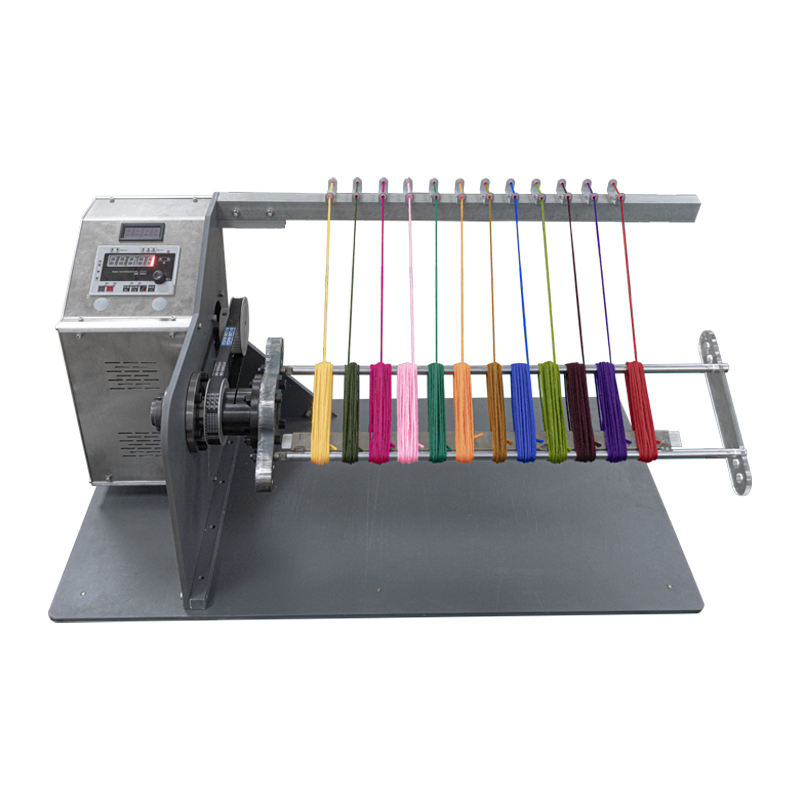
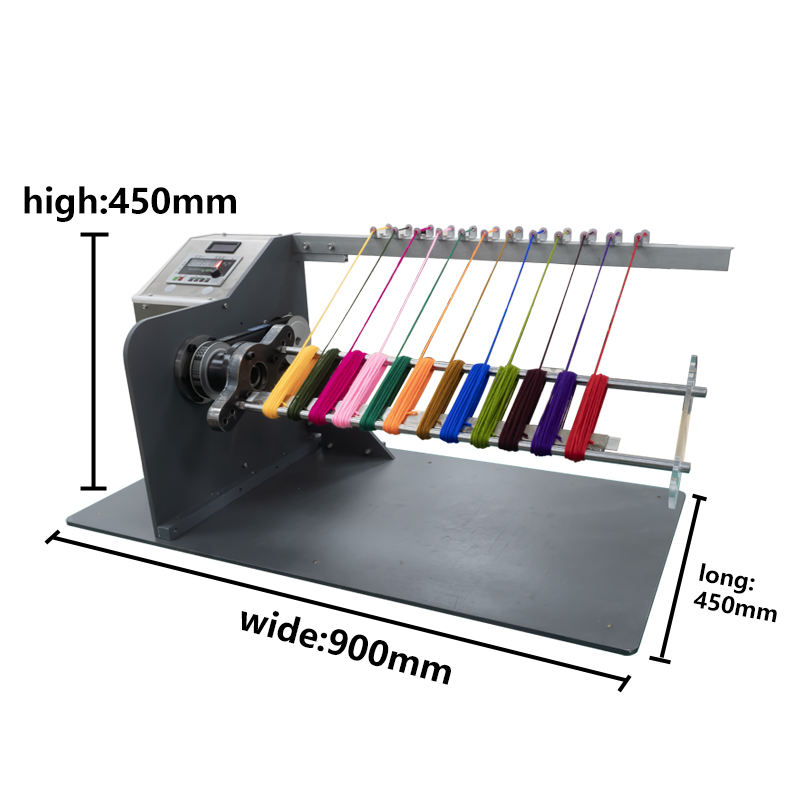
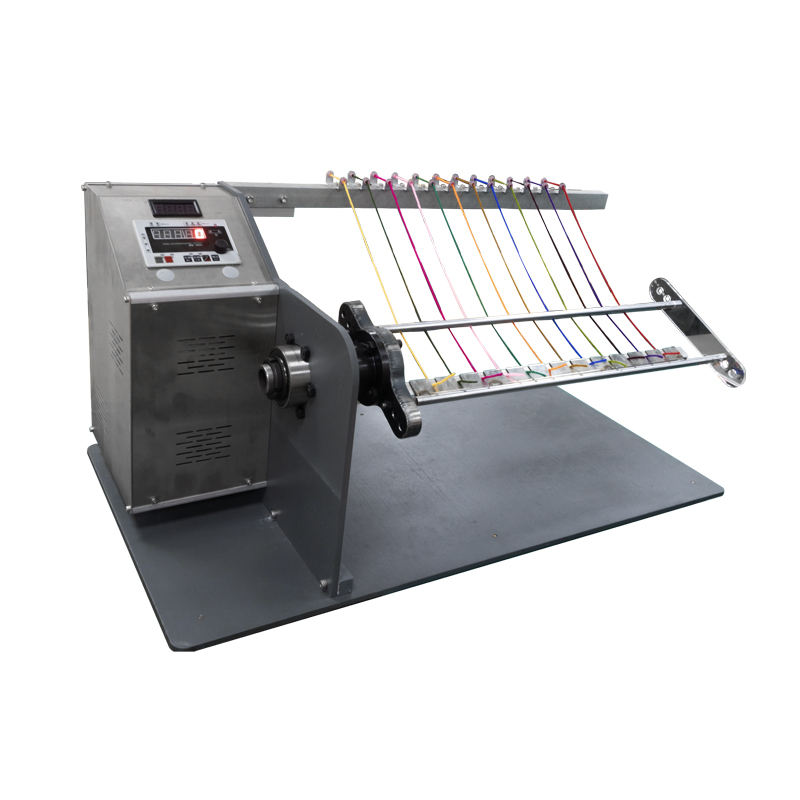
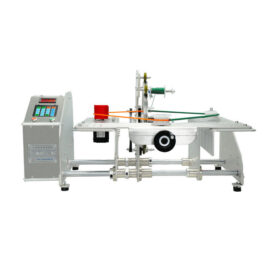
Embroidery thread separator machine is a BOYAN industrial winding solution for separating, transferring or preparing compatible embroidery thread and sewing thread for a defined downstream package. The verified reference configuration lists model YQ-F-046, a machine weight of 50 kg, a motor as the core component and an outline dimension field of 800 × 380 × 400. The unit for that dimension field is not stated in the available record, so BOYAN will confirm the unit and final drawing in the technical proposal.
“Thread separation” can mean different operations in different factories: dividing a multi-end supply, rewinding one end from a supply package, preparing measured thread packages or arranging thread for a braiding process. This page does not assume that one machine performs every interpretation. Send the incoming material, required outlet package and process video to yangle990706@gmail.com so BOYAN can define the sequence before quotation.
Embroidery Thread Separator Machine: Quick Selection Guide
An embroidery thread separator machine may be appropriate when a production team needs a motor-driven system to handle compatible thread more consistently than a manual transfer process. The strongest available facts are the YQ-F-046 model designation, 50 kg machine weight, motor core component, 800 × 380 × 400 dimension field, 92 × 47 × 42 cm individual package and 63 kg package gross weight. The source title describes an automatic embroidery-thread separator and sewing-thread winding machine for braiding requirements, and also carries a CE certification claim.
Those labels are a starting point, not a complete specification. The available record does not publish spindle count, winding speed, thread range, tension range, package size, installed power, voltage, separation method, control type, stop accuracy or production rate. BOYAN will not invent those values. They must be confirmed against a sample and written into the final scope.
- Named materials: embroidery thread and sewing thread.
- Named process context: separation, winding and preparation for braiding needs.
- Documented core component: motor.
- Selection basis: thread construction, number of ends, supply format, finished package and required rate.
- Acceptance basis: an agreed material trial and measurable package-quality criteria.
Verified Data and Items Requiring Confirmation
| Selection item | Available reference | BOYAN confirmation before supply |
|---|---|---|
| Model | YQ-F-046 | Final model and nameplate |
| Machine weight | 50 kg | Net weight for ordered configuration |
| Core component | Motor | Motor rating, drive and control arrangement |
| Dimension field | 800 × 380 × 400; unit not stated | Units and approved outline drawing |
| Individual package | 92 × 47 × 42 cm | Export packaging and lifting method |
| Package gross weight | 63 kg | Final shipping weight |
| Named material | Embroidery thread and sewing thread | Construction, linear density, finish and sample result |
| Process description | Automatic separation and winding for braiding needs | Exact inlet, separation and take-up sequence |
| CE statement | Claimed in the source product title | Certificate, model coverage, directives and destination requirements |
| Speed, tension and package range | Not published | Written technical schedule after sample review |
| Electrical input | Not published | Voltage, phase, frequency and installed power |
The 50 kg figure is machine weight, not spool capacity. The 800 × 380 × 400 field should not be treated as millimetres until the unit is confirmed. Likewise, a CE phrase in a product title is not a substitute for reviewing the declaration, certificate or technical file that applies to the supplied configuration.
Define “Separation” Before Selecting the Machine
A useful inquiry explains exactly what enters and leaves the embroidery thread separator machine. If several ends arrive on one supply, state how many ends must be separated and whether they are twisted, parallel, bonded or merely laid together. If one large package is divided into smaller packages, supply the number of take-up positions and the target quantity per position. If the machine prepares thread for braiding, show how the prepared package is loaded into the braider.
The term may also refer to unwinding a section of embroidery thread from a larger bundle, removing a temporary grouping or producing individual sewing-thread packages. These tasks can require different guides, sensors, tension devices and spindle arrangements. BOYAN uses the process description and sample to avoid offering a visually similar machine with the wrong line path.
A short production video is valuable. Record the supply package, operator threading, present bottleneck, finished package and the next operation. Include a ruler or dimensions, but do not rely only on video scale. A drawing of the supply and take-up packages remains necessary.
Thread Properties That Affect the Result
Embroidery thread may be rayon, polyester, metallic, cotton or another construction. Sewing thread may be spun, filament, core-spun, bonded or lubricated. Linear density, twist, surface finish, elasticity, static behavior, hairiness and abrasion resistance all influence the way a thread passes through guides and builds a package. A generic material name is not enough to set the machine.
An embroidery thread separator machine handling a delicate rayon thread may require smooth contact surfaces and conservative acceleration. A metallic embroidery thread may be sensitive to bend radius, repeated rubbing and twist. A lubricated industrial sewing thread can leave deposits on contact components. Hairy spun thread may create lint that affects sensors or guides. These are engineering considerations, not claims that the standard reference unit supports every case.
- Provide the thread fiber and construction.
- State ticket number, tex, denier or another recognized size designation.
- Describe twist, coating, lubrication and color-fastness concerns.
- Give minimum bend radius and allowable tension when available.
- Identify metallic, elastic, brittle, abrasive or static-sensitive behavior.
- Send enough sample material for setup and repeat trials.
Different colors of the same nominal thread may behave differently because of dye or finish. If a factory runs a broad color range, include representative dark, light and difficult colors in the sample plan.
Supply Package and Finished Package Data
The supply package controls how thread enters the system. State whether it is a cone, tube, reel, skein, hank, bundle or another format. Provide the full and empty mass, flange or base dimensions, core bore, unwind direction and whether the thread is pulled over-end or from the side. Explain how multiple ends are arranged and whether crossing or tangling currently occurs.
The finished package is equally important. Send the core or bobbin drawing, required traverse width, package diameter, target mass or length, winding direction, hardness and downstream unwind method. A package that looks acceptable may still fail if it snags, collapses, slips on the core or introduces excessive tension into a braiding or embroidery process.
The available record does not publish package dimensions or capacity for the embroidery thread separator machine. BOYAN will check shaft, fixture and clearance requirements from the buyer’s drawing. Tooling assumptions should appear in the quotation so that both parties understand what is included.
Winding Quality and Tension Control
Winding quality is produced by the combined behavior of take-up speed, thread distribution, inlet tension, acceleration, braking and package geometry. The current reference identifies a motor, but does not specify a closed-loop tension system, servo traverse or numerical tension range. Those functions must not be assumed from the words “automatic” or “high speed.”
For sensitive embroidery thread, excessive tension can stretch, flatten, polish or break the material. Too little control can create loose layers, trapped loops and unstable packages. A trial should begin at a conservative setting, then increase rate while observing thread condition, package edges and downstream unwind behavior.
If consistent tension is a critical acceptance requirement, state the measurement location, unit, target range and test instrument. The embroidery thread separator machine proposal can then identify the appropriate control and a realistic verification method instead of using an unsupported “uniform tension” statement.
Five Production Scenarios to Evaluate
1. Embroidery Thread Rewinding
Compatible embroidery thread can be evaluated for transfer from a supply cone or bundle to a process package. The buyer should define thread size, fiber, finish, color range, package geometry and acceptable cosmetic condition.
2. Sewing Thread Package Preparation
The machine may prepare sewing thread for a subsequent operation where a controlled package improves handling. Target length or mass, core retention and unwind direction should be agreed.
3. Multi-End Separation
Where one supply contains multiple ends, the process review must specify end count, inlet arrangement, desired outlet count and how a missing or broken end should be handled. The source title alone does not prove a particular number of positions.
4. Braiding Feed Preparation
An embroidery thread separator machine may be considered for preparing packages used by a braiding process. The take-up package must fit the downstream carrier and unwind smoothly under its operating conditions.
5. Sample and Color Change Work
For frequent color or style changes, the value may come from repeatable setup and clean handling rather than maximum rate. Changeover procedure, waste, cleaning access and recipe control should be reviewed.
Productivity Must Be Measured for the Real Job
The legacy page described a high-speed system, but the source record does not publish a numerical speed or output. Production rate depends on thread behavior, package size, number of positions, target quantity, acceleration, deceleration, changeover and operator tasks. BOYAN therefore asks for pieces per hour, metres per minute or another useful target together with the conditions.
A practical cycle study includes loading, threading, trial run, normal winding, stopping, package removal, tying or securing the thread and cleaning. If separation requires the operator to untangle or identify ends, that work should also be included. Maximum spindle speed by itself would not predict output.
During a sample trial, record stable running time, stops, thread breaks, package defects and changeover time. The accepted rate for an embroidery thread separator machine should be the rate that meets quality criteria, not the highest momentary speed.
CE Claim, Documentation and Destination Requirements
The source product title includes a CE certification claim. Before relying on it, buyers should request the declaration or certificate, verify the manufacturer and model, review applicable directives or standards and confirm that the delivered configuration is covered. Modifications to guards, controls or tooling may affect the documented scope.
Destination requirements vary. The buyer should state country, plant standards, electrical code, required language, guarding expectations and any third-party inspection. BOYAN can then identify the documentation available for the selected embroidery thread separator machine. This page does not represent the title claim as independent proof of compliance.
Useful deliverables may include a general arrangement drawing, electrical diagram, operating manual, maintenance list, packing list, inspection record and spare-parts list. Confirm each required document in the purchase specification.
Machine Safety and Operating Controls
Rotating spindles, shafts, couplings and thread packages can create entanglement, impact and pinch hazards. Guards, interlocks, emergency stops, safe speed during setup, electrical isolation and maintenance procedures must be appropriate for the installed system. Operators should secure loose clothing and hair and should never reach into a rotating package.
The buyer’s risk assessment must cover normal winding, loading, threading, clearing a tangle, removing a full package and maintenance. General principles are available in the OSHA machine-guarding guidance, while the final installation must meet local legal and plant requirements.
An automatic cycle does not remove the need for supervision and safe access. Before resetting a fault, determine why the thread stopped and verify that the work zone is clear. The operating procedure for an embroidery thread separator machine should define authorized setup and maintenance roles.
Recommended Trial and Commissioning Method
- Document the baseline: record the current manual or machine process, defect types and output.
- Verify samples: label each thread, supply package and take-up package.
- Inspect the setup: check guides, tooling, fasteners, guards and stop controls.
- Thread at safe state: follow the approved line path with motion isolated.
- Run slowly: observe separation, twist, rubbing, static and package tracking.
- Increase gradually: raise rate only while thread and package criteria remain acceptable.
- Check the package: inspect edges, density, damage, tangles and downstream unwind.
- Repeat: demonstrate multiple cycles and a normal changeover.
- Record settings: identify the accepted material, tooling and parameter revision.
Commissioning should reproduce the agreed test at the buyer’s site after installation. Utilities, floor, access and supply material should be ready before the technician or remote support session begins.
Factory Acceptance Checklist
- Model, nameplate and ordered configuration match the approved documents.
- Outline dimensions, weight and package data are recorded.
- Voltage, phase, frequency, installed power and protective devices are verified.
- Supply and take-up tooling fit the buyer’s drawings.
- Guards, emergency stops and safe setup functions are demonstrated.
- The agreed embroidery or sewing thread completes repeated automatic cycles.
- Separation behavior and end handling match the written process definition.
- Package appearance, damage, tension condition and downstream unwind meet criteria.
- Stable production rate and changeover time are recorded under test conditions.
- Manuals, drawings, wear parts and open actions are listed before shipment.
This checklist converts a broad product description into a measurable acceptance plan for the embroidery thread separator machine.
Information BOYAN Needs for a Proposal
- Meaning of “separation” in your process and a short operating video.
- Thread fiber, construction, size, twist, finish and representative samples.
- Number of incoming and outgoing ends.
- Supply package drawing, full mass and unwind direction.
- Finished package drawing, target length or mass and downstream use.
- Required production rate, shifts and changeover frequency.
- Acceptable thread damage, break rate and package-quality criteria.
- Voltage, phase, frequency, destination and plant standards.
- Required guards, documents, certificate review and inspection plan.
- Delivery address and required commissioning support.
Email the package to yangle990706@gmail.com. BOYAN will return a scope that separates confirmed standard features from options and items requiring a test.
Compare Related BOYAN Equipment
If the primary requirement is target-length rewinding rather than thread separation, review the CNC meter counting winding machine. If the application is compact fishing-line winding with a published 1–1000 r/min reference, review the CNC fishing line winding machine. Each product has a different documented basis and should not be selected only by a similar name.
The complete BOYAN winding machines category organizes related options. The best route is to send the process data once and let the engineering review identify the closest configuration.
Use our winding machine selection guide to compare control, material, package, speed, tension and application data before requesting a configuration.
Frequently Asked Questions
How many thread ends can this machine separate?
The available record does not state a position or end count. Send the inlet arrangement and required outlets so BOYAN can confirm the configuration.
What is the maximum winding speed?
No numerical speed is published in the verified record. A usable rate must be confirmed with the material, package and quality criteria.
Does the machine guarantee uniform tension?
No numerical tension specification or closed-loop system is stated. Define the target and measurement method if tension is an acceptance requirement.
Is CE documentation available?
The source title carries a CE claim. Applicable documentation, model coverage and destination requirements must be reviewed for the supplied machine.
Can it process metallic or elastic embroidery thread?
Compatibility is not assumed. These materials should be reviewed with data and physical samples because bend radius, stretch, surface and static behavior may require a different setup.
Are the machine dimensions 800 × 380 × 400 mm?
The available field gives 800 × 380 × 400 without a unit. BOYAN will confirm units and final outline drawing instead of presenting millimetres as a verified fact.
Can the machine be customized?
Tooling and controls can be evaluated from the process, drawings and samples. Feasibility, cost, lead time and acceptance criteria are confirmed in writing.
Request a Thread-Handling Review
For the fastest response, send the thread specification, number of ends, supply and take-up drawings, required output, destination voltage and a process video. BOYAN will check whether the YQ-F-046 reference configuration is suitable or whether another winding platform is a better basis.

Contact yangle990706@gmail.com for an embroidery thread separator machine proposal. The response will identify verified facts, open engineering fields and the recommended acceptance test.

Reviews
There are no reviews yet.